

Few things say home cooking in this part of the world like a good sambal or a fragrant rempah pounded fresh. Making sambal and rempah in Singapore is a rewarding hobby that connects you to the heart of our shared food culture, and it is far more approachable than the long ingredient lists suggest. Once you understand the building blocks, you can tweak the heat, the fragrance, and the balance to your own taste, and your cooking transforms. This guide is for the curious beginner who wants to move beyond jarred pastes and make their own from scratch.
What Are Sambal and Rempah
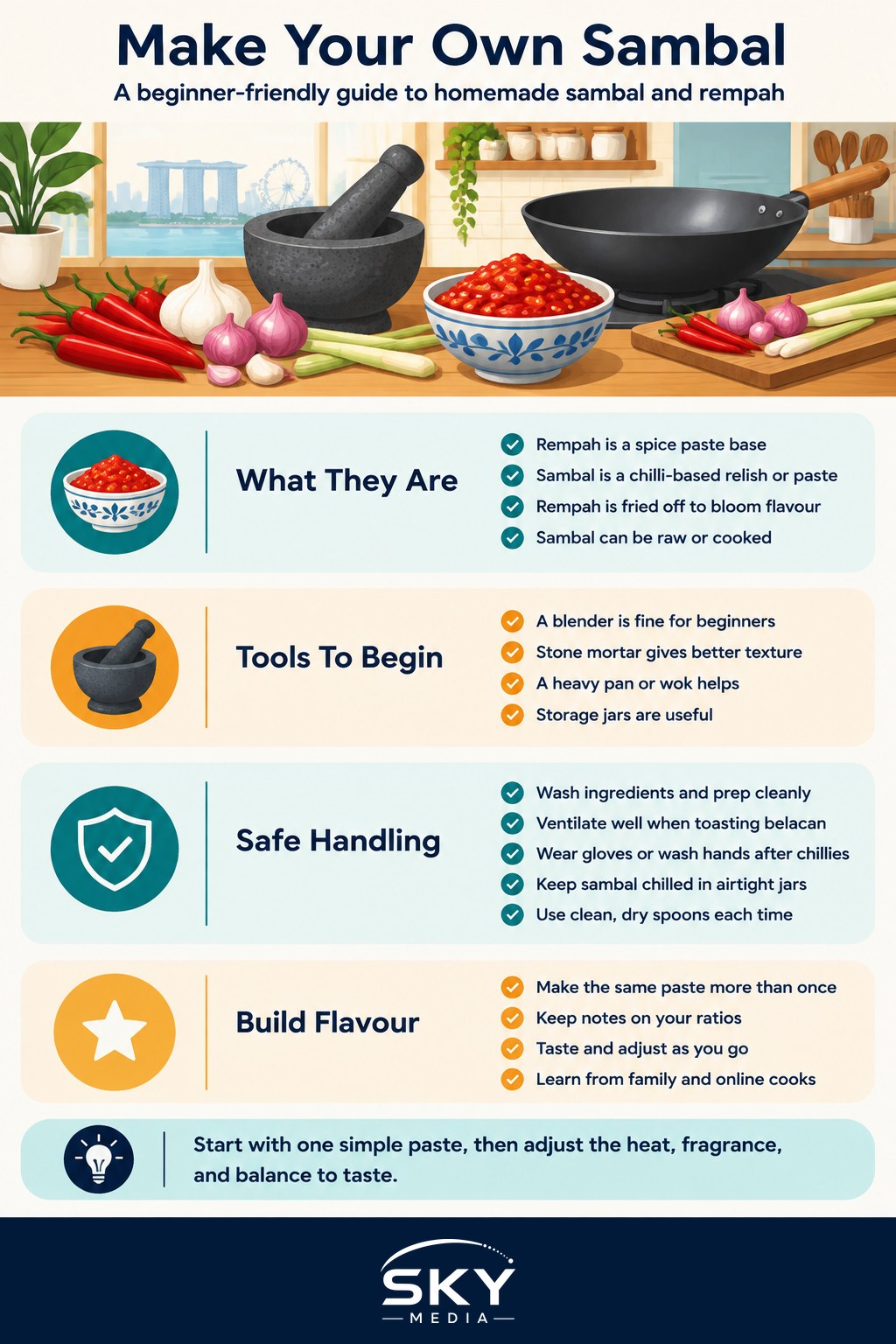
Let us clear up the terms first. Rempah is a spice paste, the aromatic base ground from fresh ingredients like shallots, garlic, ginger, galangal, lemongrass, candlenuts, and dried chillies, that gives so many local dishes their depth. It is fried off, or tumis, to bloom the flavours before you build a curry or a rendang around it. Sambal is a chilli-based relish or paste, sometimes raw, often cooked, that ranges from a simple pounded chilli with lime to a rich, slow-cooked sambal tumis.
The craft is in the balance. You learn how galangal differs from ginger, how toasting shrimp paste (belacan) changes everything, and how a little sugar or tamarind rounds out the heat. It is deeply sensory and, many say, wonderfully meditative once you get into the rhythm of pounding or blending.
There is no special climate hurdle to making these pastes, but our warmth does mean fresh pastes and cooked sambals do not keep forever at room temperature, which we will come to.
Tools and Getting Started
You need surprisingly little to begin. Traditionalists swear by the batu lesung, the stone mortar and pestle, because pounding releases oils and gives a texture a machine cannot quite match. It is also great exercise for the arms. A blender or small food processor is faster and perfectly good for beginners, especially for larger batches.
| Tier | Typical setup | Best for |
|---|---|---|
| Budget | A blender you already own, a wok or pan | Trying your first sambal cheaply |
| Mid | Stone mortar and pestle, a heavy pan, storage jars | Regular pounding and small batches |
| Premium | Good food processor plus mortar and pestle, quality jars | Frequent cooking and bigger batches |
Prices vary and change often, so check current retail rather than planning to a fixed figure. A lovely way to start is to make a simple fresh chilli sambal or a basic rempah for one dish, using a tested recipe from a trusted source, before working up to a slow sambal tumis or a full rendang paste.
Handling Ingredients Safely
Sambal and rempah are lower risk than cured meats, but a few habits keep things safe and pleasant in our warm kitchens.
- Wash and prep fresh aromatics properly, and keep your tools and surfaces clean.
- Toast belacan with good ventilation, since it is pungent, and take care with hot oil when frying off rempah, as it can spit. Keep children clear of the stove.
- Handle chillies with care. Wear gloves or wash your hands well, and keep your fingers away from your eyes; fresh chilli can sting badly.
- Store cooked sambal and fresh pastes in clean, airtight jars in the fridge, not on the counter, because our heat spoils food quickly. Use clean, dry spoons each time to avoid introducing bacteria.
- Follow the storage window a reliable recipe advises, and when in doubt, throw it out. If a paste smells off, shows mould, or has an odd fizz, discard it rather than tasting to check.
Note common allergens too. Belacan and dried prawns are shellfish, candlenuts are nuts, and some blends touch other allergens, so tell anyone you are cooking for. This is general food-handling information and not medical or nutrition advice.
Building Flavour and Finding Community
The joy of this hobby is in repetition and small adjustments. Make the same rempah a few times, keep notes on your ratios, and taste as you go. Over time you will develop an instinct for balancing heat, salt, sour, and sweet. Making sambal and rempah in Singapore also connects you to family knowledge; many home cooks pick up techniques from parents and grandparents, and online cooking communities are generous with regional variations and troubleshooting. Some community clubs and cooking studios occasionally run heritage cooking classes; check the organiser directly for current schedules.
These pastes are the gateway to a whole world of home cooking. Once your rempah is good, you might explore broader cooking as a hobby, pair your sambal with a weekend smoking and barbecue session, or lean into preserving with fermentation and pickling. If you are still exploring, our guide on how to find a new hobby can point you somewhere.
Start with one paste, respect the simple food-safety habits, and let your palate lead. There is real pride in ladling a spoonful of sambal you made yourself over a plate of rice, tuned exactly to your taste.
Frequently Asked Questions
What is the difference between sambal and rempah? Rempah is a spice paste ground from fresh aromatics like shallots, garlic, galangal and lemongrass, and it is fried to build a curry or rendang. Sambal is a chilli-based relish, sometimes raw and often cooked. Rempah is a cooking base, while sambal is usually a condiment.
Is a stone mortar better than a blender for rempah? Pounding in a batu lesung releases oils and gives a texture a machine cannot quite match, but a blender or small food processor is faster and perfectly good for beginners and larger batches. Start with what you own and upgrade if you enjoy it.
How do I stop chilli from burning my hands and eyes? Wear gloves, or wash your hands thoroughly after handling fresh chillies, and keep your fingers away from your eyes. Fresh chilli can sting badly. Wash chopping boards and tools too, so the heat does not transfer to other food.
Why do people toast belacan before using it? Toasting changes belacan’s flavour and makes it much more fragrant, which is why it matters in sambal. It is also pungent, so do it with good ventilation. Remember that belacan is a shellfish product, so tell anyone with a seafood allergy.
Can I make sambal and rempah ahead and keep them? Yes, but keep them in clean, airtight jars in the fridge, not on the counter, since Singapore’s heat spoils food quickly. Use clean, dry spoons each time and follow the storage window of a reliable recipe. Discard anything that smells off or shows mould.