
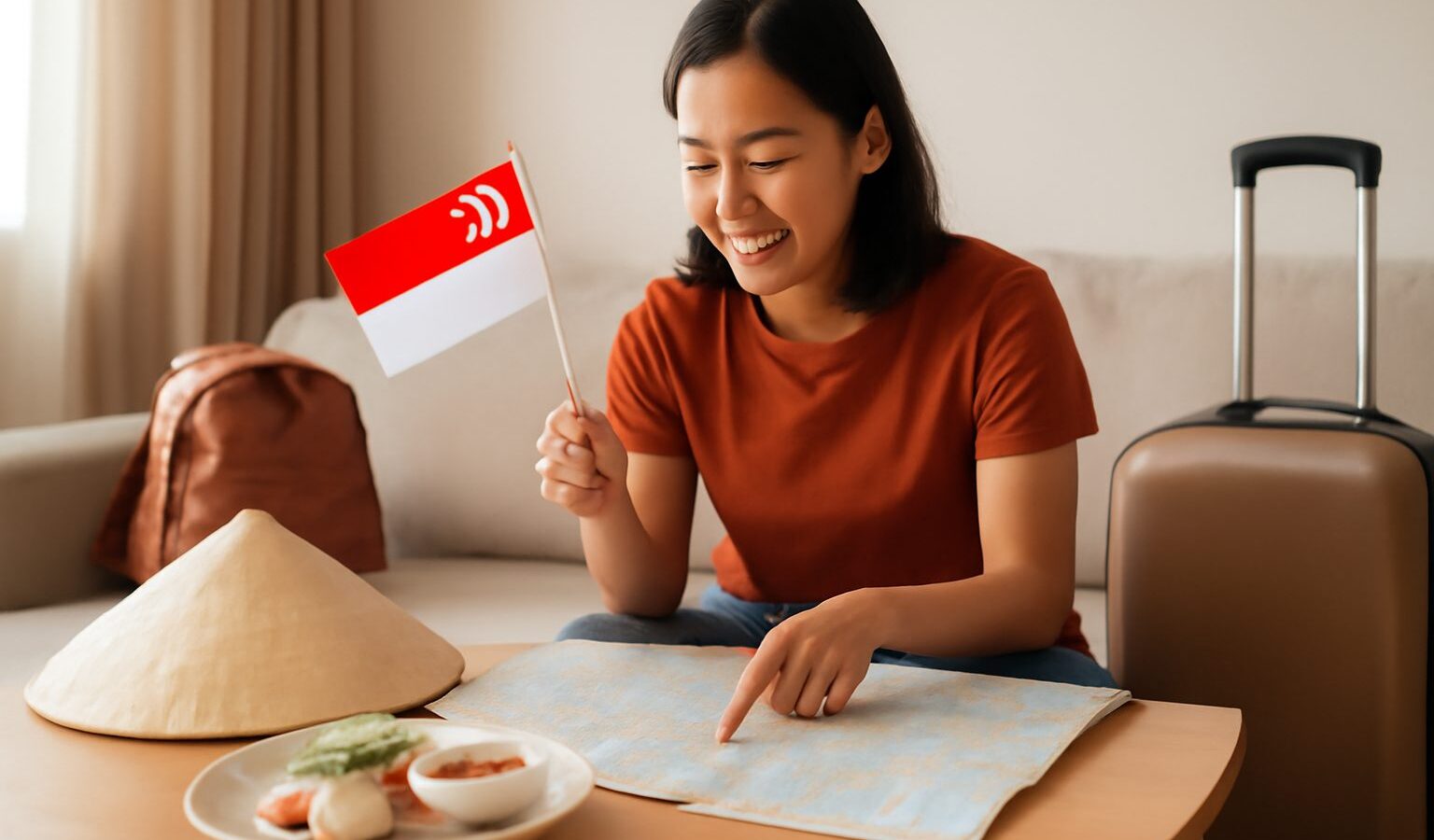
Moving to Singapore from Vietnam keeps you in the same warm corner of Southeast Asia while changing almost everything about the daily rhythm around you. If you are used to the energy of Ho Chi Minh City or Hanoi, you will recognise the tropical heat, the love of street food and the region on your doorstep. What shifts is the pace, the order and the systems, from Singapore’s efficient public transport to its structured, rule based way of life. Knowing these differences in advance makes for a far smoother move.
This is general orientation for anyone considering or planning the move, not immigration, tax or legal advice. For work passes, visas and residency, always follow the Ministry of Manpower (MOM) and the Immigration and Checkpoints Authority (ICA), whose current rules are the ones that apply and which change from time to time.
What will feel familiar
Coming from Vietnam, several things about Singapore will feel comfortable straight away. The climate is broadly similar, warm and humid throughout the year, so you are already accustomed to heat, sudden downpours and dressing for the tropics. You will not face the shock of cold winters that newcomers from northern countries do.
The wider culture has common threads too. Both societies place real value on family, hard work and good food, and both sit within a Southeast Asia that is easy to explore from Singapore’s Changi Airport. Singapore is also home to a growing Vietnamese community, with Vietnamese restaurants, grocery shops and community groups, so familiar flavours like pho and banh mi are within reach, and you can find people who share your background.
Street food culture is another point of connection. Singapore’s hawker centres, where affordable local dishes are cooked fresh and eaten communally, echo the spirit of Vietnam’s street food scene, even though the dishes and the setting differ. The joy of a good, cheap, tasty meal is common ground.
What will feel different
The most striking change is order and pace. Vietnamese cities are famously vibrant and fluid, with seas of motorbikes and a lively, improvised street life. Singapore, by contrast, is highly organised, planned and rule based. Traffic is orderly, streets are notably clean, and there is genuine enforcement against things like littering and jaywalking. Many newcomers appreciate the calm and predictability, though the transition from the buzz of Vietnamese streets can feel quiet at first.
Getting around is very different too. In Vietnam, the motorbike is central to daily life. In Singapore, private vehicle ownership is expensive and deliberately limited, so most people rely on the excellent MRT and bus network, which is clean, efficient and affordable. Adjusting from a motorbike to public transport is one of the more practical changes, and for most it is a welcome one.
Language is a meaningful shift. In Vietnam, daily life runs in Vietnamese. In Singapore, English is the working language and is used across government, business, shops and schools, alongside Mandarin, Malay and Tamil as official languages. If you are comfortable in English, settling in is much easier, and if you are still building your English, everyday exposure helps quickly. You will also meet Singlish, the local English, which is its own friendly learning curve.
Culturally, Singapore is a multicultural blend of Chinese, Malay, Indian and other communities, more visibly diverse than many parts of Vietnam. That mix shows up in festivals, places of worship, everyday customs and, wonderfully, in the food. Approaching it with curiosity and respect is part of the pleasure of living here.
A quick side by side
The table below sets out common contrasts in general terms. Treat it as orientation rather than a precise measure, since individual circumstances vary.
| At a glance | Vietnam | Singapore |
|---|---|---|
| Climate | Warm and humid, some regional variation | Warm and humid all year |
| City rhythm | Vibrant, fluid, motorbike led | Orderly, planned, rule based |
| Getting around | Motorbikes central | Excellent MRT and buses |
| Everyday language | Vietnamese | English, plus Mandarin, Malay, Tamil |
| Society | Largely homogeneous | Multicultural mix |
| Food culture | Street food, pho, banh mi | Diverse hawker fare |
Cost, housing and daily life
Singapore is generally a more expensive place to live than Vietnamese cities, particularly for housing, so it is important to plan your budget realistically. Rather than quote figures that quickly date, the sensible approach is to research current rents, school fees and everyday prices for your own situation using up to date listings and cost of living tools before you commit. Housing is usually the largest cost, and many newcomers trade a little location convenience for more space or a lower rent.
Housing also differs in character. Most Singapore residents live in HDB public flats, which are well built and generally more spacious than they look from outside, while private condominiums often include shared pools and gyms. Newcomers on work passes typically rent, so it pays to understand the neighbourhoods before signing a tenancy.
Everyday admin is efficient and largely digital, from opening a bank account to getting a local SIM and transport card. Healthcare is high quality, with public and private options, but as a newcomer you should arrange suitable insurance and understand how coverage works before you need it.
Settling in well
Because you already know tropical heat, your adjustment is more about pace and systems than climate. Give yourself time to get used to the order and the reliance on public transport, and try to see the structure as a source of ease rather than restriction.
Use the Vietnamese community as a soft landing without staying only within it. Vietnamese restaurants, shops and community groups are a comforting support, especially early on, yet the most rewarding parts of life here come from exploring the wider city, trying hawker food beyond the familiar, and making friends across cultures. Building your English confidence and learning a few local expressions will open many doors.
Plan the practicalities carefully. Arrange your work pass through your employer, sort schooling early if you have children, understand your tenancy, and keep a financial buffer for setup costs, which can be higher than you expect. For anything about eligibility, passes or residency, go directly to MOM and ICA and confirm the current requirements, because those official rules govern your move and they do change.
For many Vietnamese newcomers, moving to Singapore from Vietnam trades a familiar tropical buzz for a calmer, highly organised city that still feels close to home in climate and food. Arrive open and patient, and the island soon becomes a comfortable new base.
Explore more
Singapore Work Pass Guide
Moving to Singapore Checklist
First Month in Singapore
Cost of Living Comparison