
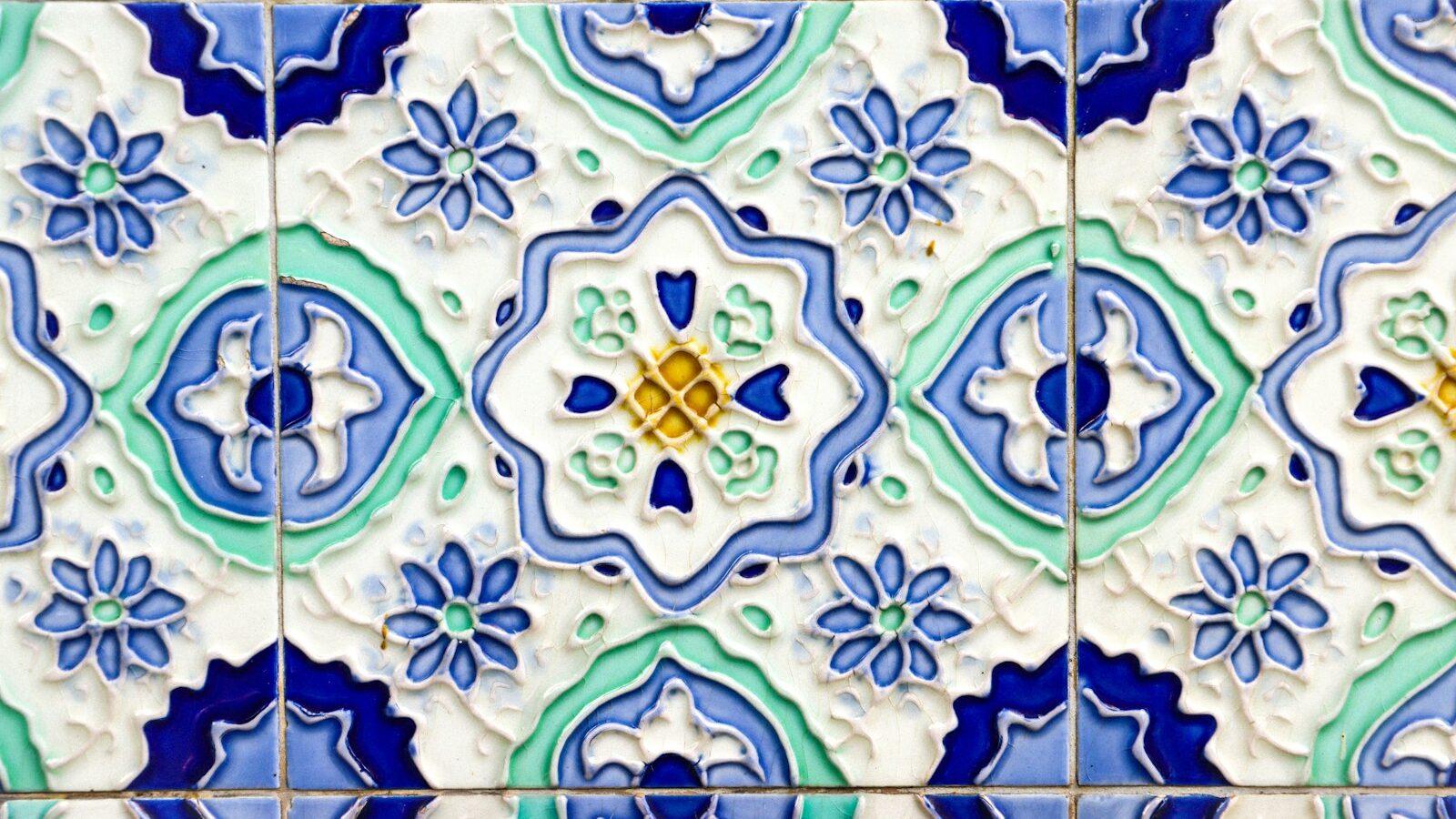
Walk down any well preserved street in Katong, Joo Chiat, Emerald Hill or Blair Road and you will notice bands of brightly glazed ceramic tiles running along the facades of old shophouses. These are peranakan tiles, and they are one of the most recognisable and cheerful features of Straits Chinese architecture. Rich in colour and pattern, they turn a plain wall into a garden of flowers, birds and geometric borders. For many Singaporeans these tiles are a warm reminder of a heritage that blends Chinese, Malay and European influences into something unmistakably local.
Understanding peranakan tiles singapore residents love means looking a little closer at what the tiles actually are, where they came from, and why they matter so much to our sense of place.
What Peranakan Tiles Are
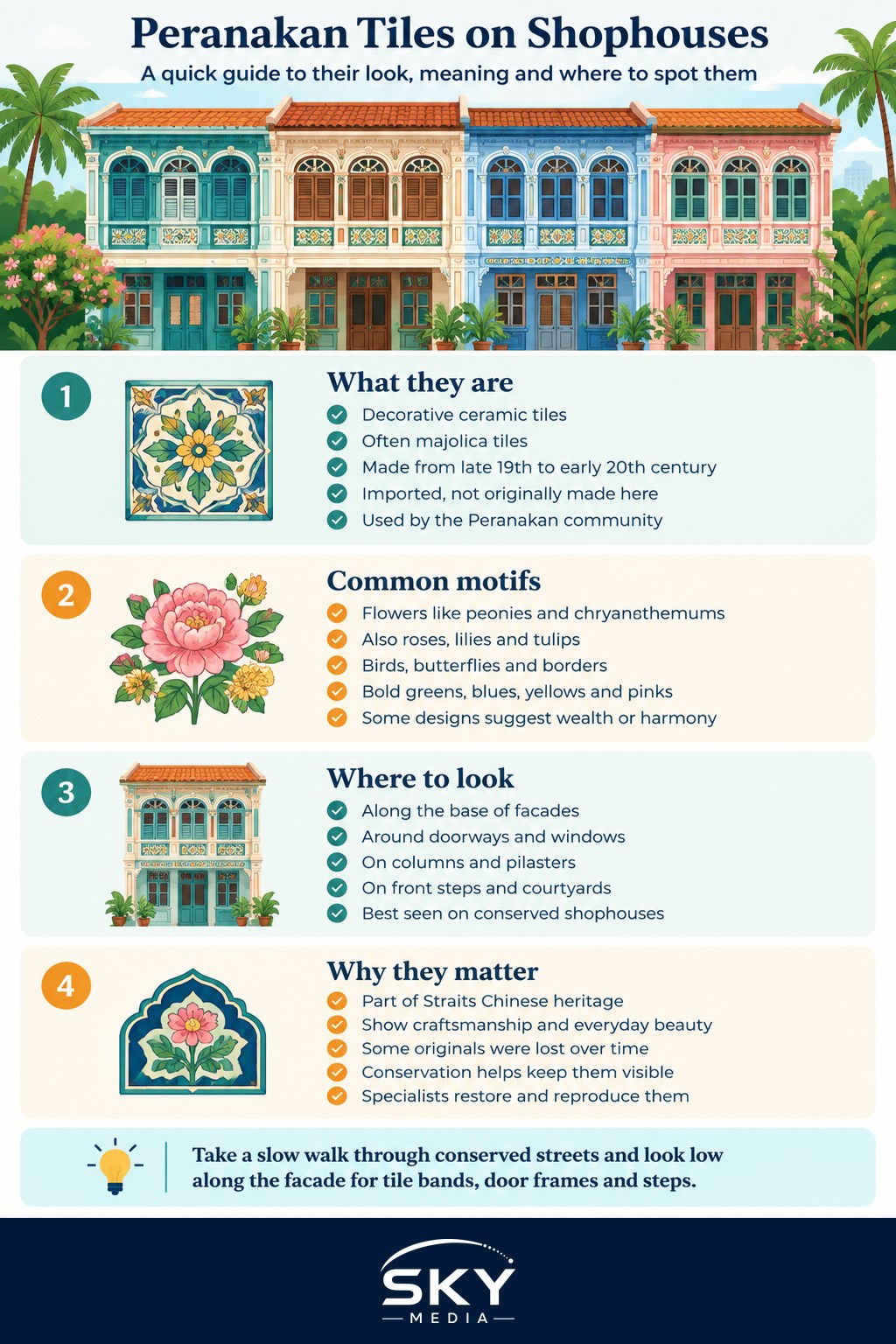
Peranakan tiles are decorative ceramic tiles, most often majolica tiles, that were produced from the late nineteenth century into the early twentieth century. Majolica refers to a tin glazed or lead glazed earthenware finished with vivid colours and raised, moulded designs. The tiles were not originally made in Singapore. Many were manufactured in England, Belgium and later Japan, then shipped across the region and adopted enthusiastically by the Peranakan community, also known as the Straits Chinese or Baba Nyonya.
The Peranakans were descendants of early Chinese traders who settled around the Malay Archipelago and intermarried with local communities. Over generations they developed a distinctive culture that drew on several traditions at once. Wealthy Peranakan families had both the means and the eye for ornament, and imported tiles offered a durable, colourful way to decorate their homes. You can learn more about this rich background in our guide to Peranakan culture.
The most common motifs include peonies, chrysanthemums, roses, lilies and tulips, along with birds, butterflies and neat geometric borders. Colours tend to be bold and confident. Deep greens, ocean blues, sunny yellows, pinks and turquoise sit side by side. Certain motifs carried gentle symbolic meanings. Peonies suggested wealth and honour, while paired birds hinted at marital harmony. The overall effect is one of prosperity, optimism and pride.
Where the Tiles Appear on a Shophouse
To appreciate these tiles it helps to understand the building they decorate. The Singapore shophouse is a narrow terrace building, usually two or three storeys tall, with a shop or workshop at street level and living quarters above. A covered walkway, the five foot way, runs along the front.
Tiles were rarely used to cover a whole wall. Instead they were placed with care to draw the eye. Look for them running as a decorative band or dado along the base of the facade, framing doorways and windows, set into pilasters and columns, or lining the risers of front steps. Inside courtyard homes they might edge an air well or a garden bed. This restrained placement, framed by carved timber, plaster mouldings and painted panels, is part of what makes the shophouse front so lively.
How the Tiles Were Made
Traditional majolica tiles began as pressed earthenware clay, often with the pattern moulded in low relief so that raised lines could hold pools of coloured glaze. After a first firing, artisans applied coloured glazes into the recessed design, a little like filling in the sections of a stained glass window. The raised outlines stopped the colours from bleeding into one another. A second firing in the kiln fused the glaze into a hard, glossy, weatherproof surface that could survive decades of tropical sun and rain.
Because the tiles were mass produced to standard sizes, families could mix and match patterns to suit their taste and budget. That is why two neighbouring shophouses can share a street yet look completely different.
Their Place in Singapore’s Heritage
Peranakan tiles are woven into the wider story of Straits Chinese life, alongside beaded slippers, porcelain, intricate wood carving and the elegant Nyonya kebaya. They speak of a community that prized craftsmanship, hospitality and beauty in everyday surroundings. The tiles also connect to the broader effort of preserving Singapore heritage, since conserved shophouses keep these decorative traditions visible for new generations.
Over the years many original tiles were lost to redevelopment, weathering or simple neglect. Today conservation guidelines in gazetted districts encourage owners to retain and restore original features, and a small number of specialists work to salvage, clean and reproduce vintage patterns.
How to See and Learn About Them Today
The easiest way to enjoy peranakan tiles is a slow walk through the conservation districts of Katong and Joo Chiat, Blair Road and Everton Road in Tanjong Pagar, and Emerald Hill off Orchard Road. Bring a camera and look low, since many tiles sit near the base of the wall. Heritage museums and galleries devoted to Peranakan life often display tile panels and explain their symbolism, and community heritage trails run from time to time.
If you would like to go deeper, look out for current heritage programmes, guided trails and conservation talks, and support the practitioners who still restore and reproduce these tiles. You might also enjoy our overview of understanding Peranakan culture in Singapore, which sets these colourful facades in their fuller context. Every restored panel is a small act of keeping our shared story bright.
Frequently Asked Questions
Can I buy or reproduce vintage Peranakan tiles for my own home? Reproduction is possible, because a small number of specialists salvage, clean and reproduce vintage patterns. Availability and cost vary, so ask the specialists directly. If your home is in a conservation district, check what restoration rules apply before changing the facade.
Why are Peranakan tiles so colourful? The glazes were bold on purpose, since the tiles signalled prosperity and pride. Deep greens, ocean blues, sunny yellows, pinks and turquoise sit side by side. Raised outlines in the moulded design kept each colour from bleeding into its neighbour during firing.
What do the flowers and birds on the tiles mean? Many motifs carried gentle symbolism. Peonies suggested wealth and honour, while paired birds hinted at marital harmony. Other common designs such as chrysanthemums, roses, lilies and butterflies were enjoyed for their beauty, set off by neat geometric borders.
Which neighbourhoods are best for spotting shophouse tiles on foot? Head for the conservation districts of Katong and Joo Chiat, Blair Road and Everton Road in Tanjong Pagar, and Emerald Hill off Orchard Road. Look low, because many tiles run in bands near the base of the wall or frame doors and steps.
Are the tiles on old shophouses really made in Singapore? Mostly not. Many were manufactured in England, Belgium and later Japan, then shipped across the region and adopted by the Peranakan community. They were mass produced to standard sizes, which let families mix patterns to suit their taste and budget.
Further reading: Peranakan Porcelain and Nyonyaware