
Singapore is often described through its main groups, yet the fuller story includes many smaller communities whose influence far outweighs their numbers. The sikh community singapore has built distinctive places of worship and shaped local life for generations, and alongside them the Arab, Jewish, Armenian, Boyanese, and other groups have each left a lasting mark on the city’s streets, buildings, and culture. These communities arrived through trade, migration, and the movements of empire, and many of their descendants remain woven into Singapore’s social fabric today. This guide introduces them respectfully, focusing on their heritage and their places of worship, while noting that traditions vary between families.
The Sikh Community
Sikhs came to Singapore largely from the Punjab region, and over time built a settled community with a strong sense of identity. Sikhism is a distinct faith with its own scripture and traditions, and the gurdwara, or Sikh temple, is its centre of worship and community life. Visitors to a gurdwara remove their shoes and cover their heads, and one of the most cherished traditions is the langar, a free community kitchen where anyone, regardless of background, is welcomed to share a simple vegetarian meal seated together as equals.
Many Sikh Singaporeans are recognisable by the turban and other articles of faith kept by observant members, though practice varies from person to person and family to family. The community observes festivals such as Vaisakhi and the birth anniversaries of the Gurus, marked with prayers, processions in some years, and shared meals. Sikh institutions have long contributed to education and charity in Singapore, reflecting the faith’s emphasis on service. As with any community, individuals differ in how closely they follow tradition, so it is best not to generalise.
The Arab Community
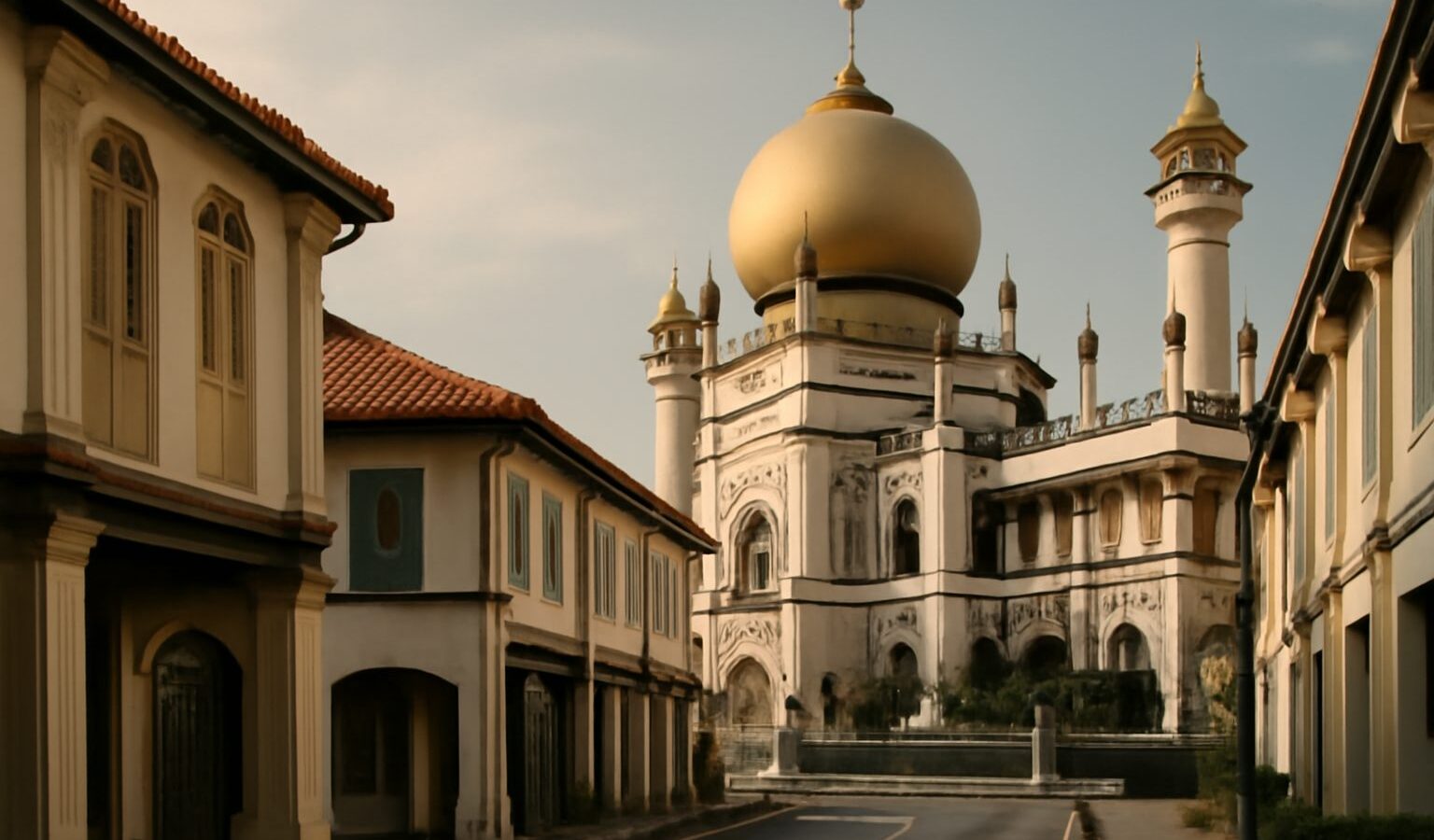
Arab traders, many with roots in the Hadhramaut region, settled in Singapore and became influential in commerce, property, and philanthropy. Their legacy is visible in the Kampong Glam area, where street names such as Arab Street and Baghdad Street point to this heritage, and where the district’s identity as a Malay and Muslim quarter was shaped in part by Arab families. Several prominent families endowed mosques, schools, and charitable trusts that continue to serve the wider community.
Though the community is small, its imprint on Singapore’s landscape and institutions is significant. Places of worship and heritage buildings associated with Arab benefactors remain important landmarks, and the surrounding streets have kept much of their historic character. The community has long been closely connected to the broader Muslim population here through shared faith and intermarriage.
The Jewish Community
Jewish merchants, many originally from Baghdad and other parts of the Middle East, established a small but active community in Singapore. They contributed to trade and public life, and several individuals rose to prominence in business and beyond. The community maintains synagogues that serve as its religious and social heart, and one of them is recognised for its heritage value.
Jewish traditions centre on the Sabbath, festivals, and dietary observance, kept according to each family’s level of practice. A street name in the older part of the city still recalls the community’s historic presence. Though modest in size, the Jewish community has remained a continuous thread in Singapore’s story, quietly sustaining its customs across generations.
The Armenian Community
The Armenian community was small but remarkably influential relative to its numbers. Armenian merchants were among the early settlers, and they built the Armenian Church, one of Singapore’s oldest Christian places of worship and a treasured piece of heritage architecture. The church and its serene grounds remain a peaceful landmark in the civic district.
Armenians contributed to several institutions that Singaporeans still know today, and the community is remembered for its outsized role in early commercial and social life. The national flower is popularly associated with a cultivar linked to an Armenian resident, a small but often-cited example of the community’s lasting connection to Singapore’s identity. Today very few Armenians remain, but their heritage is carefully preserved.
The Boyanese and Other Communities
The Boyanese, or Baweanese, came from Bawean Island in what is now Indonesia and settled mainly within the broader Malay community. Historically many worked as horse handlers, drivers, and in related trades, and they organised themselves through communal lodging houses known as pondok, which provided newcomers with accommodation and support. Over time the Boyanese have largely integrated into the Malay Muslim community while retaining a sense of their distinct origins.
Singapore is home to still other smaller groups, each with its own story, including communities that arrived through regional trade and migration. Among the threads you may encounter:
- The Boyanese, known for their pondok system and strong communal ties.
- Various South Asian communities beyond the largest groups, each with distinct languages and customs.
- Descendants of traders and settlers from across the wider region who blended into local society.
These communities remind us that Singapore’s diversity runs deeper than the broad labels suggest.
Places of Worship and Heritage at a Glance
The table below offers a simple overview. Treat it as a general guide, and check current visiting details directly, since access, timings, and etiquette can change.
| Community | Place of Worship or Landmark | Notes |
|---|---|---|
| Sikh | Gurdwara (Sikh temple) | Cover head, remove shoes, langar meal shared |
| Arab | Historic mosques in Kampong Glam | Linked to Arab benefactors and endowments |
| Jewish | Synagogues, one heritage listed | Observance varies by family |
| Armenian | Armenian Church | Among the oldest Christian buildings here |
Why These Communities Matter
Singapore’s smaller communities show that heritage is not only about the largest groups. The sikh community singapore, alongside the Arab, Jewish, Armenian, Boyanese, and other communities, helped build the institutions, streets, and shared spirit of openness that define the island. Their gurdwaras, mosques, synagogues, and churches stand as reminders of a long history of migration and coexistence. If you wish to visit any place of worship, dress modestly, follow the etiquette asked of you, and check current arrangements in advance. Approached with respect and curiosity, these communities offer a richer understanding of who Singapore is.
Explore more
To go deeper into the neighbourhoods where these stories unfold, read our Kampong Glam heritage guide and our overview of Singapore’s ethnic enclaves. You may also enjoy our guide to Indian customs and traditions and a handful of basic Tamil phrases for Singapore to help you connect across communities.