
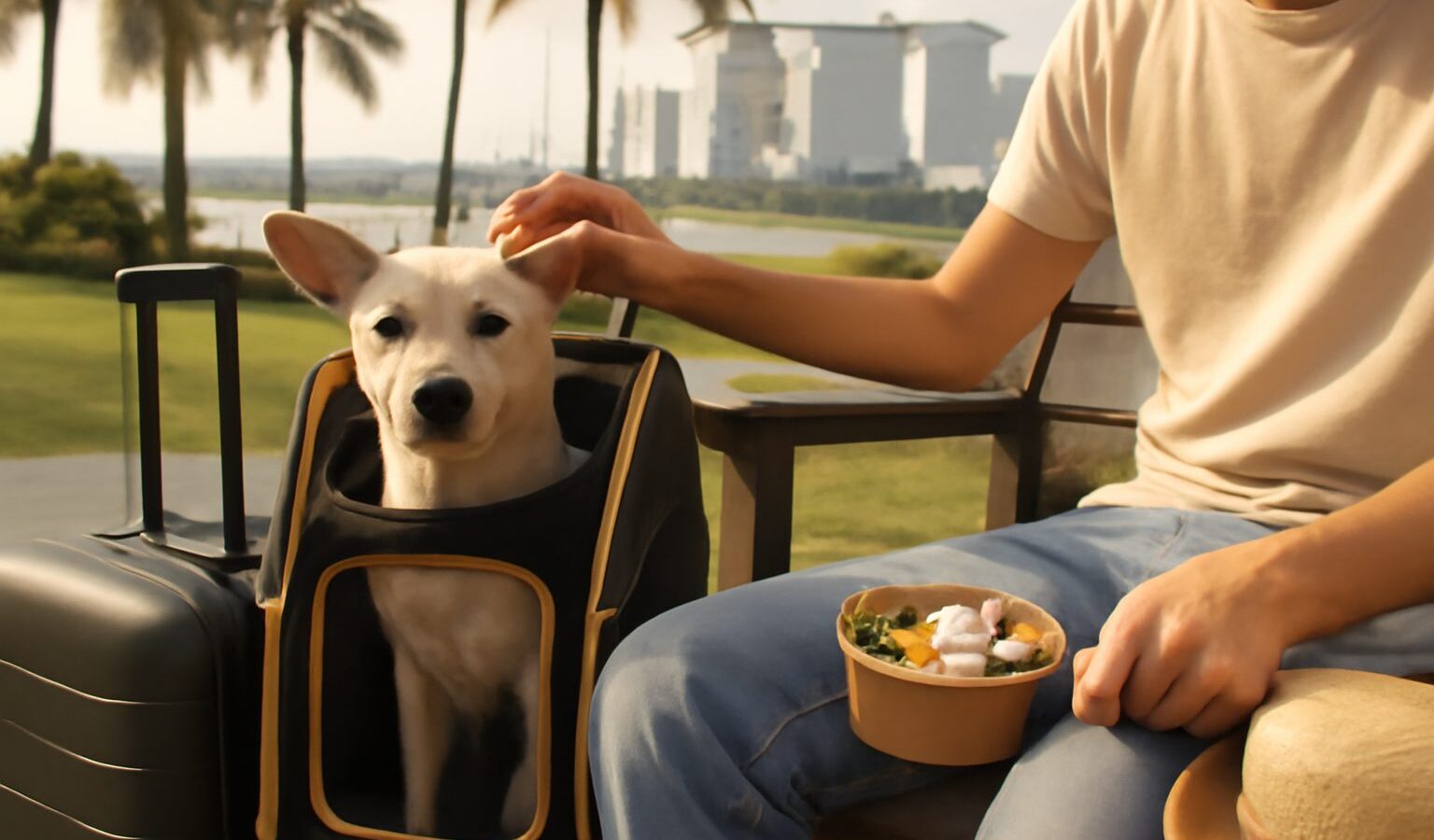
Getting around the island with a furry companion takes a little more planning than a solo trip, but it is very doable once you know the rules and prepare well. Whether you are heading to the vet, visiting family, or exploring a new park, travelling with your pet Singapore-wide is mostly about the right carrier, sensible timing around our heat, and staying calm so your pet does too. This guide walks through your main options, what to pack, and how to keep every journey safe and low stress.
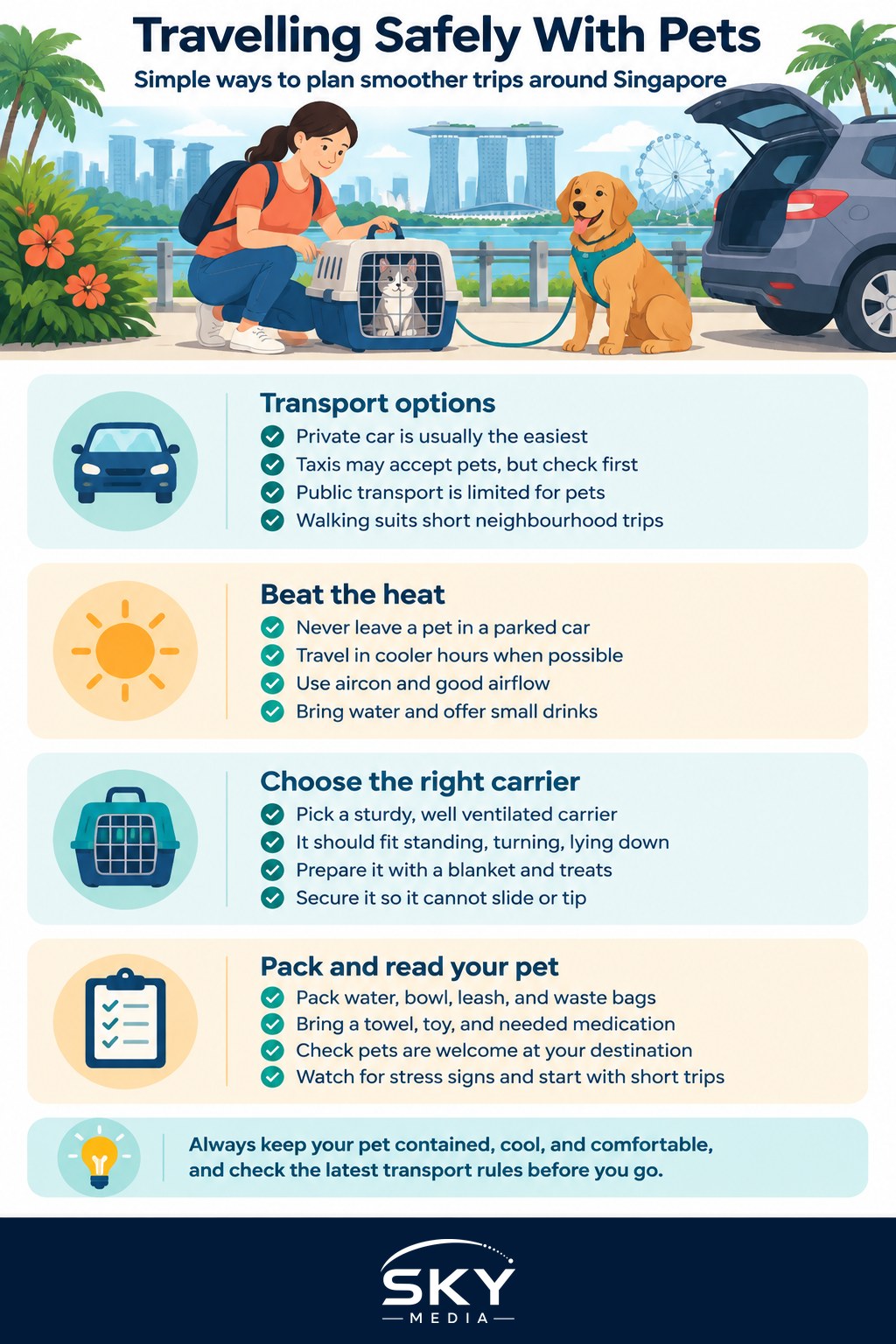
Knowing Your Transport Options
Singapore is compact, so most trips are short, but each mode of transport has its own conditions for animals. Rules change from time to time and can differ by operator, so always check the latest guidance from the relevant transport authority or company before you set off.
- Private car. This is usually the easiest and most flexible choice. Secure your pet in a well ventilated carrier or with a proper pet seatbelt harness so a sudden stop does not send them flying. Never let a dog hang its head out of a moving window.
- Taxis and private hire. Many drivers welcome pets, but not all, so it is polite and practical to say you have an animal when you book or flag one down. A carrier or a clean blanket on the seat helps, and some services have specific pet friendly options.
- Public buses and trains. Public transport generally restricts animals other than certified assistance dogs, with limited exceptions for small pets in proper carriers on some services. Confirm the current policy with the operator rather than assuming.
- Walking and cycling. For short neighbourhood hops, a leash for dogs or a secure carrier for cats and small pets can be all you need.
Whatever you choose, the golden rule is containment. A frightened animal in an unfamiliar vehicle can bolt, and a loose pet is a danger to itself, to you, and to other road users.
Beating the Heat On Every Trip
Our climate is warm and humid all year, and a parked or poorly ventilated vehicle heats up fast. This is the single biggest risk when moving pets around the island.
Never, ever leave a pet alone in a parked car, not even for a couple of minutes with the window cracked. Temperatures inside can climb to dangerous levels very quickly and lead to heatstroke, which is a life threatening emergency. Signs of heatstroke include heavy panting, drooling, weakness, vomiting, and collapse. If you see these, cool your pet gradually with room temperature water and get to an emergency vet immediately.
To keep journeys comfortable:
- Travel during cooler hours where you can, such as early morning or evening.
- Run the aircon or keep good airflow through the vehicle.
- Bring water and a collapsible bowl, and offer small drinks on longer trips.
- Use a carrier with mesh panels for ventilation, and avoid direct sun on the carrier.
- Keep walks to shaded routes and check that pavement is not too hot for paws.
For more on this, our guide to keeping pets cool in Singapore’s heat has detailed tips you can apply to travel days too.
Choosing and Using the Right Carrier
A good carrier is the foundation of safe pet travel. It should be sturdy, well ventilated, and large enough for your pet to stand, turn around, and lie down comfortably. Soft sided carriers suit cats and small dogs for short trips, while a firm plastic crate offers more protection in a car.
Help your pet feel at home in the carrier before travel day. Leave it open at home with a familiar blanket and a few treats inside so it becomes a safe space rather than a signal of a stressful vet visit. Line the base with an absorbent pad in case of accidents, and secure the carrier so it cannot slide or tip.
A Quick Comparison of Local Travel Options
| Mode | Best for | Containment needed | Key thing to check |
|---|---|---|---|
| Private car | Most trips, vet runs | Carrier or pet harness | Never leave pet alone inside |
| Taxi or private hire | Cross island trips | Carrier or seat cover | Confirm pet is allowed when booking |
| Public transport | Limited, assistance dogs | Approved carrier if permitted | Check current operator policy |
| Walking | Short neighbourhood trips | Leash or carrier | Heat and paw safety on hot ground |
Packing and Planning Ahead
A short checklist saves stress. Pack water and a bowl, a leash or harness, waste bags, an absorbent pad or towel, a favourite toy, and any medication your pet needs. Bring a copy of important details such as your pet’s licence information and your vet’s contact number in case of emergencies.
Think about your destination too. If you are visiting somewhere new, confirm that pets are welcome. Our roundup of pet friendly places in Singapore is a helpful starting point for planning outings that your pet can join.
Keeping Calm and Reading Your Pet
Some animals take to travel easily while others find it stressful. Watch your pet’s body language. Panting when it is not hot, drooling, trembling, or trying to hide can signal anxiety. Start with very short trips to build positive associations, reward calm behaviour, and speak in a soothing voice.
If your pet regularly gets carsick, becomes extremely distressed, or has a health condition that travel might aggravate, speak to a licensed vet before your next trip. They can advise on motion sickness, anxiety, and whether any care is needed. This article is general information and is not a substitute for veterinary advice. If your pet shows any red flag signs such as trouble breathing, collapse, seizures, or refusing to eat or drink, treat it as an emergency and get to a vet right away.
With a little preparation, moving around the island with your companion can be smooth and even enjoyable. Match the transport to the trip, respect the heat, use a proper carrier, and go at your pet’s pace. If you are still setting up pet life here, our overview on getting a pet in Singapore and the practical budgeting for a pet in Singapore guide both pair nicely with safe, well planned travel.
Official sources: Animal & Veterinary Service
Further reading: Driving With Your Pet Safely