
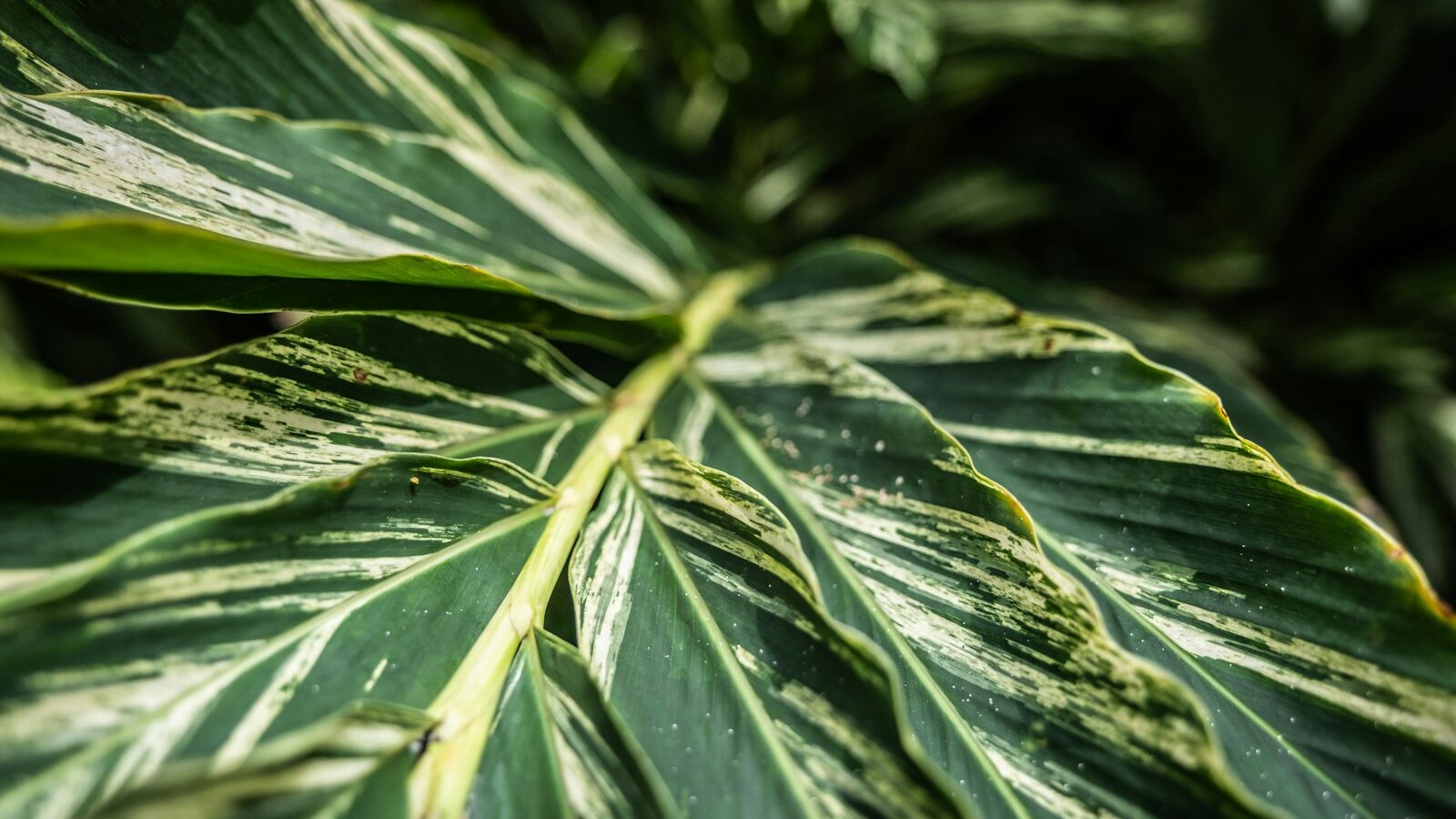
The zebra plant, known botanically as Aphelandra, earns its name from bold white veins that stripe its glossy dark leaves. It also throws up a striking cone of yellow flower bracts that can last for weeks. It is a beautiful, dramatic houseplant, and it has a reputation for being a little fussy. The good news is that our warm, humid climate solves half of its demands for free. Get the light, moisture and humidity right and zebra plant care singapore homes can offer becomes far less intimidating than the plant’s diva reputation suggests.
This is a plant grown mostly for its foliage, though the flower spike is a lovely bonus. It suits a bright shelf or a sheltered balcony corner rather than a sunny ledge. If you are new to leafy indoor plants in general, it helps to start with a beginners guide to houseplants singapore, which covers the fundamentals this plant builds on.
Light and placement
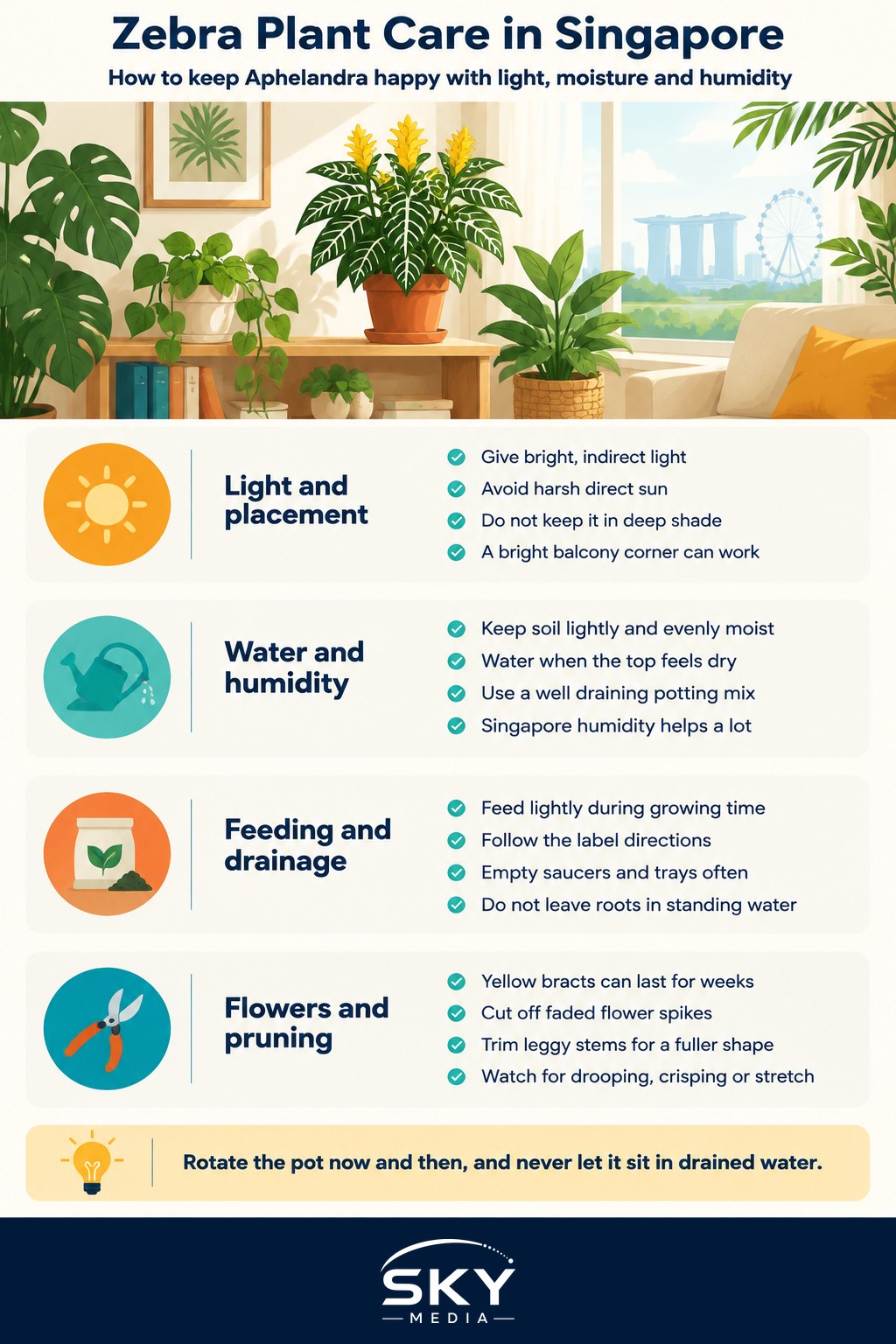
The zebra plant wants bright, indirect light. In the wild it grows on shaded forest floors, so it dislikes harsh direct sun, which scorches and fades those beautiful striped leaves. It also sulks in deep gloom, growing leggy and losing its bold markings. Aim for a spot with plenty of soft, filtered light, such as near a window shaded by a sheer curtain or a bright balcony corner out of the direct beam.
That preference for bright shade makes it well suited to many spots inside an HDB flat, where strong sun is often limited to the balcony. Rotate the pot now and then so the plant grows evenly rather than leaning towards the light. If your light is on the dimmer side, understanding light for your plants can help you judge whether a spot is bright enough before you commit the plant to it.
Watering, humidity and feeding
Consistent moisture is the heart of zebra plant care singapore style. This plant likes its potting mix to stay lightly and evenly moist, never drying out completely and never turning into a swamp. If it dries out too far, the leaves droop dramatically and the lower ones may drop. Water when the top of the mix begins to feel dry, giving it a thorough drink until water drains through, then let the surface dry slightly before the next round. Use a well draining potting mix so the roots get moisture without staying waterlogged.
Humidity is where our climate helps enormously. The zebra plant loves humid air, and Singapore delivers that naturally, so the crispy leaf edges that frustrate growers in dry countries are much less of a problem here. Grouping it with other plants can lift local humidity further, an idea explored in grouping plants to boost humidity singapore.
Do be careful with saucers and trays. Never let the pot sit in a pool of drained water, because soggy roots rot and standing water in saucers and trays is a breeding spot for Aedes mosquitoes. Empty and scrub them regularly and follow NParks and NEA guidance on preventing mosquito breeding. Feed lightly through the growing period with a balanced fertiliser at the dilution stated on the label, and always follow the current product instructions rather than overfeeding.
The flower spike, pruning and problems
If your zebra plant is healthy and well fed, it may produce its signature cone of golden-yellow bracts with small flowers peeking out. The colourful bracts hold for several weeks. Once they fade and brown, snip the spent spike off so the plant can put its energy back into growth. Pinching or trimming leggy stems encourages a bushier, fuller shape rather than a bare, stretched plant.
The most common complaints are drooping leaves from underwatering, crispy edges from very dry air or scorching sun, and leggy growth from too little light. Each has a simple fix once you spot the cause. As a general precaution, keep the plant out of reach of pets and children who might chew the leaves, and wash your hands after handling and pruning. If you want more striking foliage plants to pair with it, growing and caring for calatheas singapore makes a good companion read for lovers of patterned leaves.
The zebra plant looks demanding but rewards a little attention. Give it bright shade, steady moisture and our naturally humid air, keep its saucer empty, and feed it lightly, and this bold, striped beauty can become a real centrepiece in a small tropical home.
Frequently Asked Questions
Why are my zebra plant’s leaves drooping suddenly? Drooping is most often caused by the mix drying out too far. Give it a thorough drink and the leaves often recover within a day or so. If the mix is already wet, check for root rot from poor drainage.
Will my zebra plant flower indoors without direct sun? It can, given enough bright, indirect light and steady feeding and moisture. Direct sun is not needed and scorches the leaves. The yellow bracts hold for several weeks.
Should I cut the yellow flower spike off when it browns? Yes, snip the spent spike off once the bracts fade and brown, so the plant puts its energy back into growth. Cut just above a healthy pair of leaves. Trimming leggy stems at the same time encourages a bushier shape.
Is a zebra plant harder to keep than a calathea? Both enjoy humidity and bright shade, and Singapore’s air suits them. The zebra plant sulks if it dries out, while calatheas tend to crisp their edges. Neither is difficult once you keep moisture even.
Why are the lower leaves of my zebra plant dropping? Lower leaves usually drop when the mix has dried out too far or the plant is in too little light. Check watering first, then move it somewhere brighter but indirect. Some old leaves dropping slowly is normal.
Further reading: Caring for Ming Aralia in Singapore · Caring for a Stromanthe Triostar in Singapore · Caring for a Clivia Plant in Singapore