

Location within a development matters as much as the development itself. Two units in the same block can feel completely different to live in, and one of the most overlooked factors is how close a unit sits to a carpark entrance, exit or ramp. A home near a carpark entrance may look fine during a quiet weekday viewing, then reveal headlight glare, engine noise and exhaust smells once you are living there.
This guide explains what to look for, how to test it during viewings and how to weigh the trade-offs, whether you are buying an HDB flat beside a multi-storey carpark or a condo unit above the basement ramp.
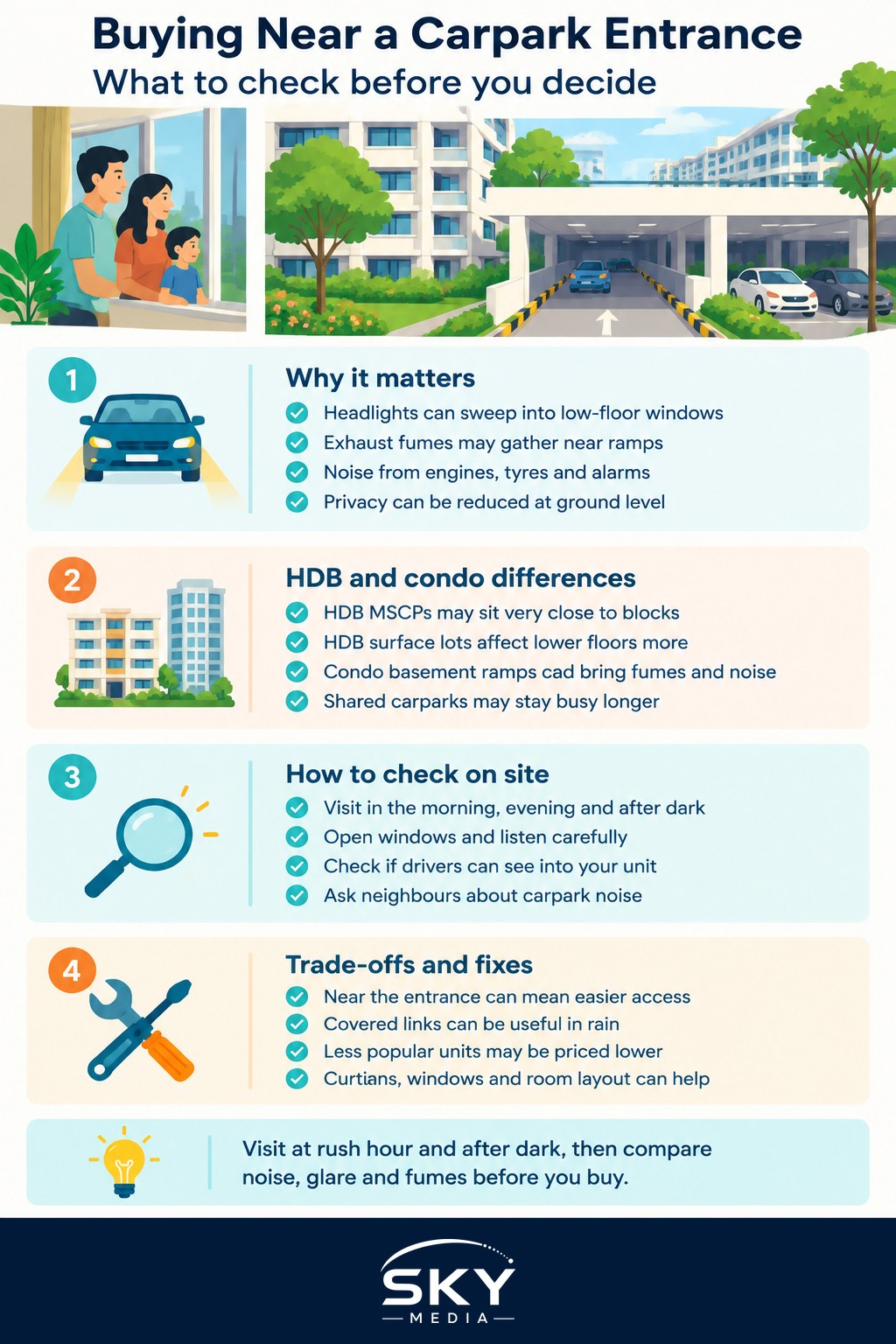
Why Carpark Entrances Affect Daily Living
A carpark entrance concentrates vehicles into a single point. Every car entering or leaving slows, turns, brakes and accelerates in the same spot. The effects add up in several ways.
Headlight glare. Cars climbing a ramp or turning into an entrance at night can sweep their headlights across nearby windows. On lower floors facing the entrance, this can mean flashes of light through bedroom curtains late into the evening.
Exhaust fumes. Idling at a gantry, queuing during peak hours and climbing ramps all produce exhaust. Units directly above or beside an entrance, especially on low floors, may notice smells when windows are open. Singapore homes rely heavily on natural ventilation, so this matters more than in sealed buildings.
Noise. Expect engines revving up ramps, tyres squealing on smooth painted floors, gantry beeps, car alarms, horns at blind corners and doors slamming. Motorcycles and delivery vans can be noticeably louder than cars.
Privacy. Drivers waiting at the barrier have a clear view into low-floor units facing the entrance. Pedestrians walking in and out of the carpark also pass close to windows and corridors.
Peak-hour congestion. Morning and evening rush, school drop-offs and weekend events can create queues that block the driveway near your block, making it harder to get out yourself.
HDB Versus Condo: How the Issue Differs
The type of carpark shapes the problem. Here is how common setups compare.
| Setup | Typical issues | Units most affected | Possible mitigating factors |
|---|---|---|---|
| HDB multi-storey carpark (MSCP) next to a block | Headlights from each deck, engine noise, roof-level activity | Units facing the MSCP at similar heights | Distance between buildings, screening or greenery |
| HDB surface carpark | Headlights and doors slamming at ground level | Lower floors facing the lots | Trees, landscaping, higher floor choice |
| Condo basement ramp entrance | Fumes and engine noise at the ramp mouth, gantry beeps | Low-floor units directly above or beside the ramp | Covered ramps, enclosed driveways |
| Condo guardhouse and drop-off point | Taxis, delivery riders and visitors idling | Units overlooking the main driveway | Generous setbacks, separate service entrance |
| Commercial or shared carpark next door | Late-night and weekend traffic, possibly 24-hour access | Units facing the public entrance | Operating hours, distance from your stack |
In HDB estates, multi-storey carparks often sit very close to residential blocks. Units on floors level with the carpark decks may see straight into parked cars, while higher floors above the roof deck may have a clearer outlook. In condos, the main concern is usually the basement ramp and the drop-off area near the lobby.
How to Check During a Viewing
A single daytime viewing rarely shows the full picture. To judge a unit properly:
- Visit at different times. Go during the morning rush (roughly when people leave for work and school), the evening return and after dark. This is when headlights and queues are most noticeable.
- Stand at the windows and listen. Open the windows, close your eyes for a minute and count how many vehicles you hear.
- Check the sightlines. From the bedroom and living room, can you see the barrier or ramp? If you can see the cars, the drivers can probably see you.
- Notice the ramp surface. Smooth epoxy-painted ramps often cause tyre squeal. Ask the managing agent or town council whether there have been complaints.
- Smell the air. Stand by the windows near peak hours and notice any exhaust smell.
- Look at the carpark’s use. Is it shared with a market, clinic, mall or school? Busy neighbouring uses mean more traffic and possibly longer hours.
- Ask neighbours. Residents are often happy to tell you whether the carpark bothers them.
You can also use online maps and the developer’s site plan to see where entrances and exits are located relative to your stack.
Questions About Future Changes
Carparks are not fixed forever. Ask or check:
- Planned upgrading. HDB estates go through upgrading programmes, and carpark works can mean temporary construction noise. Your town council can advise on known plans.
- Changes to entrances. A redevelopment or new road can shift where vehicles enter. URA’s Master Plan, available online, shows planned land uses nearby, and our guide to buying a home near a future construction site explains how to read nearby development risk.
- Electric vehicle charging. As more carparks add charging points, usage patterns can change, though EVs are generally quieter than petrol cars.
- Condo by-laws. For private developments, the management corporation (MCST) sets rules on visitor parking, delivery access and speed humps. Ask the managing agent for minutes of recent meetings to see if carpark issues come up.
Weighing Resale and Practical Benefits
Living near a carpark entrance is not all downside. The benefits are real for some buyers:
- Convenience. Short walks to your car, easier loading of groceries and quick drop-offs for elderly parents or young children.
- Shelter. Covered linkways from carparks to blocks can keep you dry during heavy rain.
- Price. Units with a less desirable outlook are sometimes priced lower, which can suit buyers on a budget.
On the other hand, future buyers may share your concerns, so the same features that lower your price could affect resale appeal. Prices depend on many factors, so speak to a property agent or check recent transaction data from HDB or URA rather than assuming a fixed discount.
Your lifestyle also matters. Shift workers who sleep in the day, families with light-sleeping babies and people who work from home will feel noise and glare more than those out all day.
Practical Ways to Reduce the Impact
If you love a unit despite its location, a few measures help:
- Blackout curtains or blinds to block headlight sweeps at night. Our guide to blackout curtains in Singapore covers the options.
- Acoustic or double-glazed windows, subject to HDB or MCST approval, to reduce engine noise.
- Air purifiers and keeping windows closed during peak hours if fumes are noticeable.
- Planting or screens on balconies or window ledges, where rules allow, for privacy.
- Room planning. Put bedrooms on the quieter side and use the room facing the carpark as a study or storeroom.
Similar micro-location trade-offs apply to other nearby features, such as a bus interchange or a bin centre. The common thread is simple: visit at the times that matter, ask the right people and decide with your eyes open.
Further reading: Buying a Home Near an Electrical Substation or Telco Antenna in Singapore · What to Know Before Buying a Corner Terrace House