
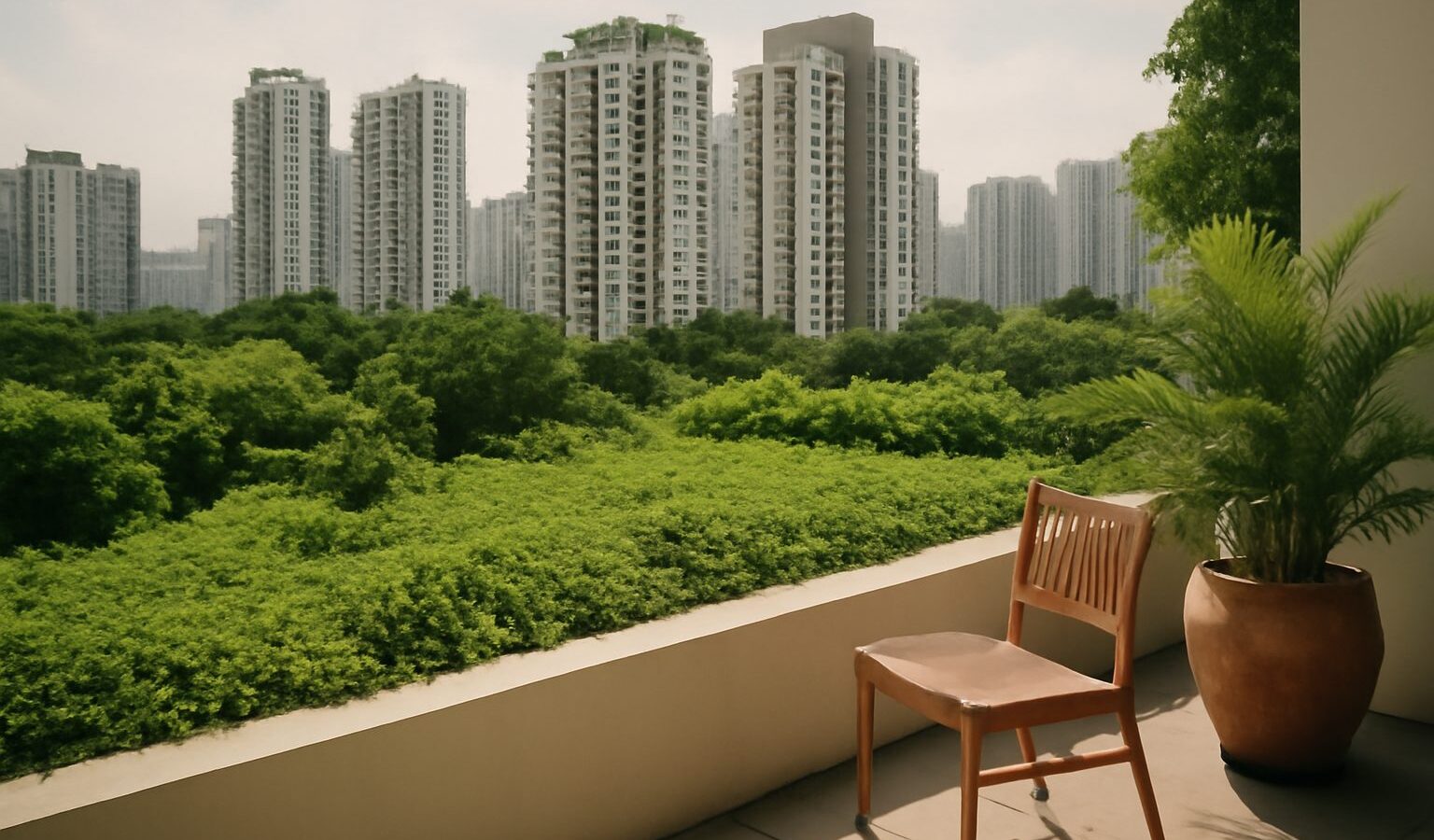
Look up in Singapore and you will increasingly see plants where there used to be bare concrete: cascading vines down the side of a car park, a rooftop meadow on an office block, a lush wall in a shopping mall atrium. This is skyrise greenery, the umbrella term for planting on and up buildings rather than only at ground level. In a dense, warm island where flat land is precious, growing greenery vertically and on rooftops is one of the smartest ways to keep the city liveable, and it is not only for architects and developers. There is plenty an ordinary resident can do too.
Skyrise greenery covers green roofs (planting laid across the top of a building), vertical greenery or green walls (plants growing up or down a facade), and the greening of sky terraces, planter ledges and podium decks. Together they turn hard surfaces into living ones.
Why Greenery Up High Matters Here
Singapore’s heat and humidity make the case on their own. Bare concrete and tarmac soak up the sun and radiate it back, which is a big part of why built-up areas feel hotter than green ones. A layer of plants shades those surfaces and cools the air around them through the moisture they release, softening the urban heat that everyone feels walking between blocks at midday. On a building, a green roof also shields the structure below, which can ease the load on air-conditioning in the top-floor spaces.
The benefits stack up beyond temperature:
- Rain management. Planting and its soil soak up rainfall and slow the rush of water during our heavy downpours, easing the strain on drains.
- Biodiversity. Greenery high up gives butterflies, birds and other creatures food and stepping stones to move across the city, extending the habitat that ground-level parks provide.
- Cleaner, calmer surroundings. Plants trap dust, buffer noise and simply make a place nicer to be in, with the well-documented lift to mood that green views bring.
- A greener skyline. Collectively, all this planting supports Singapore’s long-running vision of a City in Nature and the goals of the Singapore Green Plan.
These are also exactly the reasons NParks and BCA encourage greenery in new developments, and why so many buildings now weave it into their design from the start.
Ground-Level Park Versus Greenery Up High
A rooftop or wall garden is not the same as a park bench and a patch of grass. Knowing the differences helps you plan sensibly.
| Consideration | Ground-level greenery | Skyrise greenery |
|---|---|---|
| Space used | Takes up scarce land | Uses roofs and walls that were bare |
| Sun and wind | Often sheltered | Hotter, windier, more exposed |
| Watering | Easier to reach | Needs planned irrigation |
| Weight and structure | Not a concern | Must respect the building’s limits |
| Cooling effect | Cools the immediate area | Also shields the building itself |
| Who approves it | Straightforward | Needs HDB or MCST permission |
The exposure point is the one people underestimate. Up high, plants face stronger sun, drying wind and fast-draining conditions, so hardy, drought-tolerant species tend to do best. Where you can, favour native plants, which are suited to our climate and support local wildlife; our guide to gardening with native plants is a good starting list.
What Residents Can Actually Do
You do not need to own a building to take part. For most people, the accessible version of skyrise greenery is a well-planted balcony, corridor or window ledge, and the collective effect of many small green spots across a block is real.
A few ways to get started:
- Green your balcony or service yard. Potted shrubs, trailing plants and a small trellis bring many of the same cooling and wildlife benefits on a domestic scale.
- Choose the right plants for the aspect. A blazing west-facing ledge needs tougher, sun-loving species than a shaded north-facing one. Match the plant to the light.
- Invite pollinators. A few nectar and host plants can turn a balcony into a genuine refuge; our guide to starting a butterfly garden on your balcony walks through how.
- Join a communal effort. Many precincts have community gardens or rooftop plots. If yours does not, it is worth asking your town council or neighbours, and the urban farming and rooftop gardens piece covers how these get going.
- Think of it as cooling too. Greenery on and around your home works alongside other measures; see passive cooling for your home for how planting fits with shading and ventilation.
Gardening Up High the Responsible Way
Greenery on a balcony or ledge comes with a few important rules, and they exist for good reason.
- Get permission first. For HDB flats and private condos alike, check what your HDB rules or your MCST (the management corporation for a condo) allow before installing anything fixed, hanging heavy pots over ledges, or drilling into the facade. Falling pots are a genuine safety risk.
- Never let water stand. This is the big one in Singapore. Pot trays, saucers and any container that collects rainwater can breed mosquitoes within days. Empty or cover standing water, tip out saucers after watering and rain, and follow the current NEA guidance on mosquito prevention.
- Water wisely. Exposed planting dries out fast, but that does not mean drowning it. Water in the cooler parts of the day and mulch to hold moisture; our water-saving in the garden guide has practical tips that matter even more up high.
- Secure everything. Anchor pots and trellises against the wind, and keep heavier items low and stable rather than perched on a railing.
Handle these basics and your slice of skyrise greenery is a joy rather than a hazard.
The Bigger Picture
Individual balconies, community rooftops and large green facades are all part of the same movement to weave nature back through a dense city. NParks runs programmes to encourage and recognise skyrise greenery, and initiatives such as OneMillionTrees push in the same direction at ground level, all feeding the wider ambition of a City in Nature. Because guidelines, incentives and any grants for building owners change over time, check the current NParks and BCA information if you are planning something substantial, and confirm your own HDB or MCST rules before you start.
For a resident, though, the invitation is simple. Skyrise greenery is not only a job for developers and their green walls. A thoughtfully planted balcony, a shared rooftop plot, a corridor lined with hardy pots: each adds a little cooling, a little habitat and a little calm to the block. Multiply that across a neighbourhood and the effect on how the city feels is anything but small. Start with one pot in the right spot, look after it well, and let your patch of the skyline grow greener from there.