
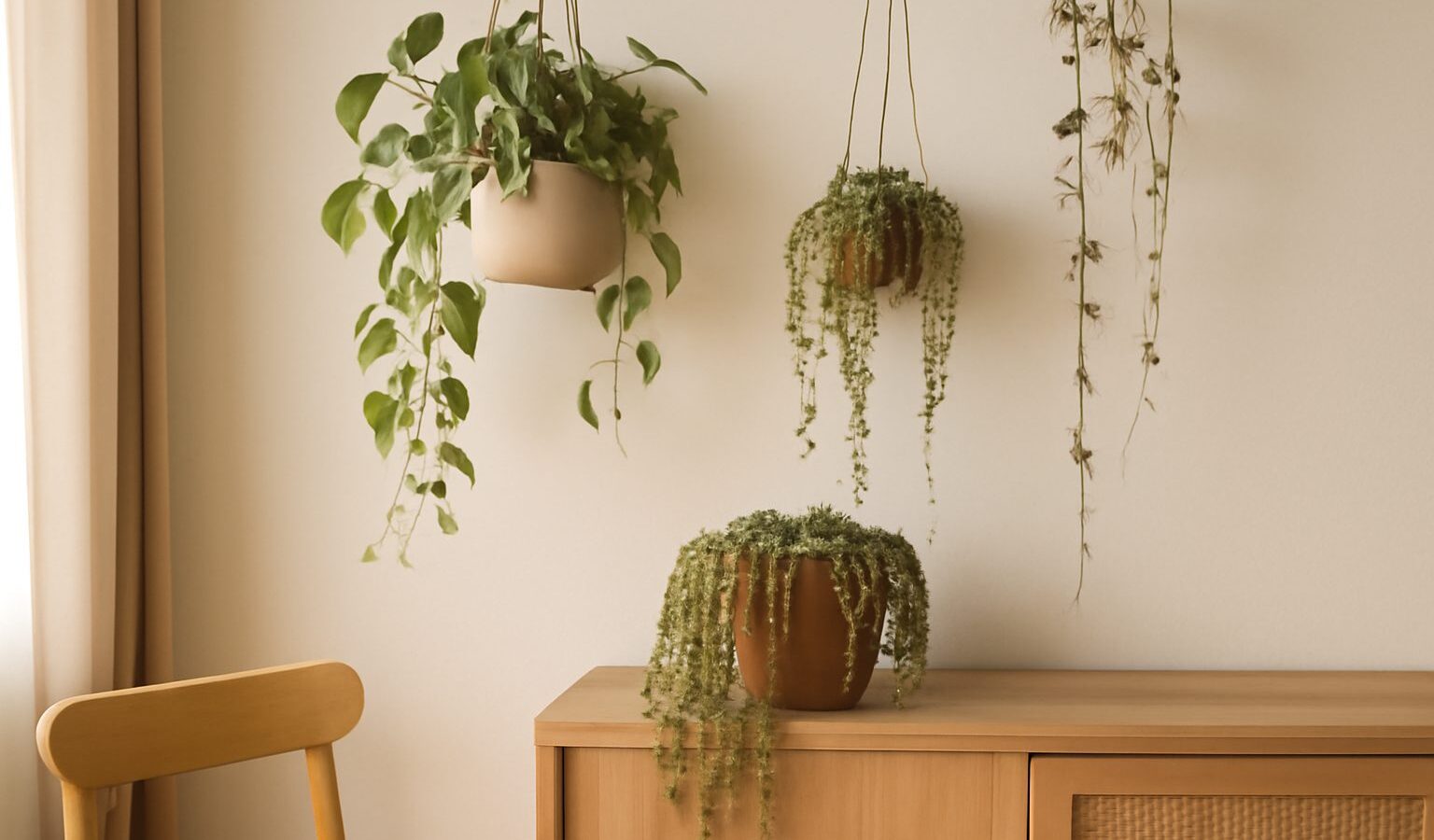
There is something quietly luxurious about foliage that spills from a shelf, tumbles over a basket or drapes down a bare wall. For homes and flats short on floor space, the best trailing plants Singapore gardeners can grow turn empty vertical space into greenery, softening hard edges and drawing the eye upwards. This is a general guide to species that suit our warm, humid conditions, with notes on light and safety so you can choose well.
Trailing and hanging plants are ideal for balconies, corridors and bright indoor corners because they make the most of height rather than surface. Many are also forgiving, which makes them a friendly place for a beginner to start. As always, match the plant to the light your space actually offers rather than to the picture you have in your head, and you will be rewarded with long, healthy growth.
Easy Trailers for Beginners
If you are just starting out, begin with the tough, adaptable species below. They cope with the ordinary ups and downs of home care and bounce back quickly from the odd missed watering.
- Pothos is the classic beginner trailer, with glossy heart-shaped leaves on fast-growing vines. It tolerates a wide range of light, from bright indirect to fairly dim corners, and is happy trailing from a shelf or trained up a pole.
- Heartleaf philodendron looks similar and is just as easy, with soft green heart-shaped leaves that trail elegantly and grow quickly in warmth.
- Spider plant sends out arching stems tipped with baby plantlets, which you can snip off and root to make more. It enjoys bright indirect light and is one of the most rewarding plants to propagate.
- Golden pothos and its cousins root readily in water, so a single plant soon becomes several. This makes them excellent value and easy to share with friends.
All of these thrive in our year-round warmth, ask only for occasional watering once the top of the mix dries, and forgive the beginner mistakes that would finish off a fussier plant.
Statement Trailers for More Light
When you have a genuinely bright spot and a little more confidence, the following species reward you with real drama.
String of pearls and its relatives, string of hearts and string of dolphins, produce fine cascading strands studded with unusual leaves, and they look wonderful spilling from a high shelf. These are succulents, so they need bright light and a very open, gritty mix, and they hate sitting wet, which is the quickest way to lose them in our humid air. Water sparingly and let them dry between drinks.
For lush, jungly drama, a trailing hoya offers thick waxy leaves and, in time, clusters of scented star-shaped flowers, while a mature philodendron or a trailing syngonium fills a basket with generous foliage. English ivy can trail beautifully indoors in bright, airy spots, though it dislikes stagnant heat, so give it good airflow. Each of these wants brighter light than the beginner trailers, so reserve them for a well-lit window or balcony edge that is shaded from the harshest midday sun.
Light, Watering and Toxicity at a Glance
Use the table to match a plant to your conditions before you buy, and note the toxicity column carefully if you share your home with pets or young children.
| Plant | Light it prefers | Toxic to pets and children? |
|---|---|---|
| Pothos | Bright indirect to low | Yes, keep out of reach |
| Heartleaf philodendron | Bright indirect to medium | Yes, keep out of reach |
| Spider plant | Bright indirect | No, considered pet-safe |
| String of pearls | Bright, some direct | Yes, keep out of reach |
| Trailing hoya | Bright indirect | Generally considered safe |
| English ivy | Bright, airy | Yes, keep out of reach |
Several of the most popular trailers, including pothos, philodendron and string of pearls, are toxic if chewed or eaten, and their tumbling stems can be tempting to curious pets and small children. Hang them high, well out of reach, and choose a genuinely pet-safe option such as a spider plant for spaces a cat or toddler can get to. If a plant is ever nibbled, contact a vet or doctor for advice rather than waiting to see what happens.
Caring for Trailing Plants in Our Climate
Hanging plants dry out faster than pots sitting on a table, because air moves freely all around the basket and warm air rises to meet them. In our heat that means checking them more often than you might expect, especially any hung near a sunny window or out on a breezy balcony. Feel the top of the mix and water thoroughly when it is dry, letting the excess drain away completely so no roots sit in a soggy base.
Give trailing stems the occasional trim to keep them full rather than straggly, as pinching the tips encourages the plant to branch and thicken. Those trimmings are free plants, since most trailers root easily in water or damp mix. Turn hanging baskets now and then so every side gets light and the growth stays even, and wipe dust off broad leaves so they can breathe.
During the wet monsoon, move outdoor baskets under shelter so they are not battered by heavy rain or left permanently waterlogged, and make sure no drip tray or basket base holds standing water, which can breed mosquitoes and invites the diseases they carry. In drier, hazier spells, keep a closer eye on watering, as baskets can crisp up surprisingly fast.
Bring Your Walls to Life
Trailing and hanging plants are one of the simplest ways to add greenery when floor space is tight, and there is a suitable species for almost every light level and every level of experience. Start with a forgiving pothos or spider plant, hang it where it can grow freely, keep an eye on watering in our heat, and mind the toxic species around pets and children. Before long you will have soft green curtains of foliage transforming the plainest corner of your home.
Explore more
Growing String of Pearls and Hanging Plants
The Best Low-Maintenance Indoor Plants
Styling Plants in Your Home
A Beginner’s Guide to Houseplants