
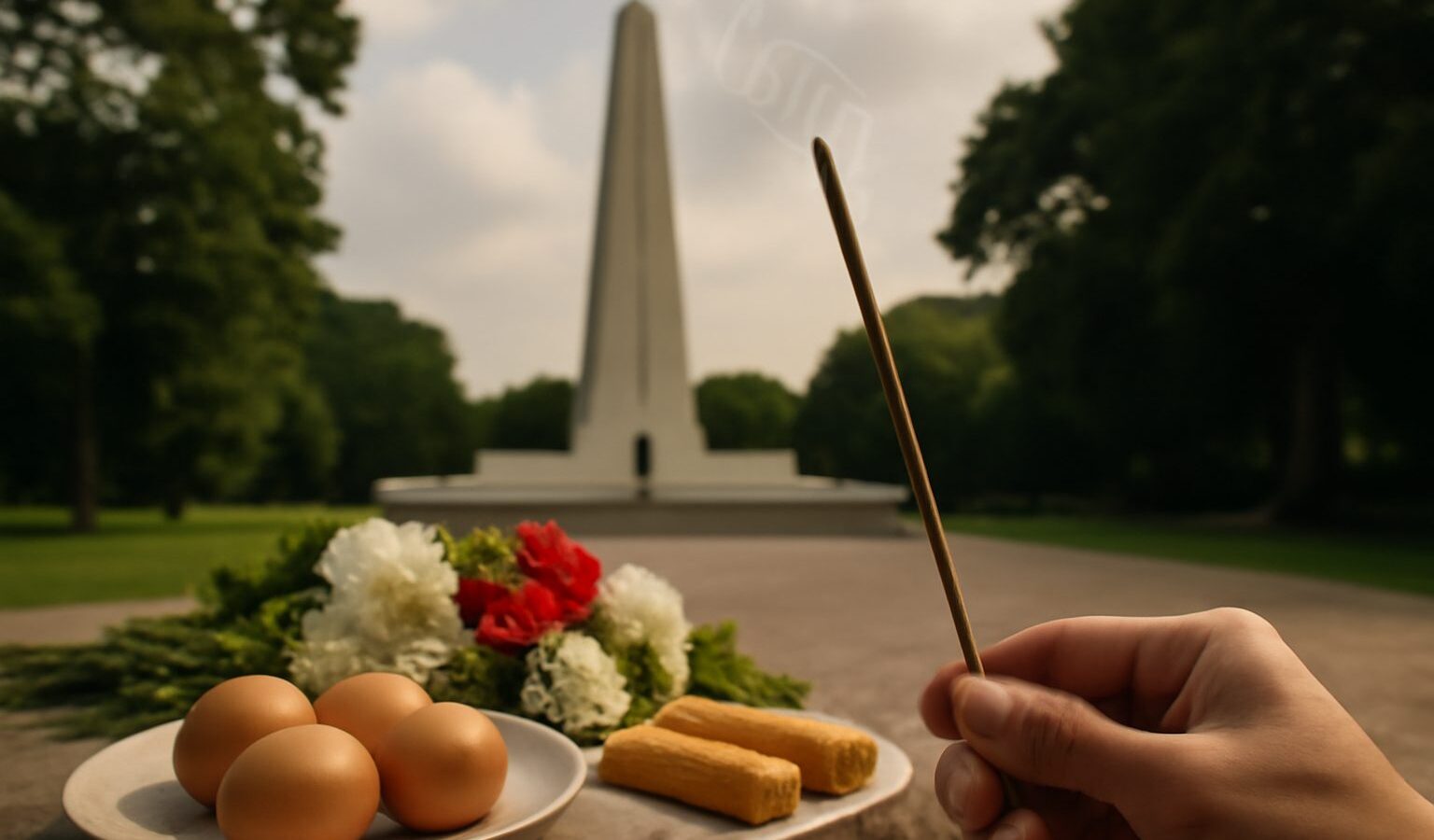
Among the most painful memories of the Second World War in Singapore is the episode known as the Sook Ching. During the Japanese Occupation, which began after the fall of Singapore in early 1942, the occupying forces carried out a systematic screening and mass killing of civilians. The victims numbered in the thousands, and historians note that estimates vary and have been the subject of long study. This article treats the subject soberly and with respect, focusing on what happened, where it is remembered, and how those who died are honoured. When writing about sook ching singapore, the aim is remembrance, not sensation.
What the Sook Ching Was
The term is commonly translated as a purge or a cleansing through purge. In the weeks following the surrender of the island, the occupying authorities ordered the male population, and in some accounts wider groups, to report to screening centres set up across the island. There, individuals were examined, questioned and sorted. Those deemed suspect by the screeners were taken away, and many were never seen again.
The screening was arbitrary and its criteria opaque. People could be marked out for reasons as slight as their occupation, their associations, a tattoo, or simple bad luck in front of a screener. Those selected were transported to remote locations, often along the coast, where the killings took place. The precise number of victims cannot be stated with certainty, and responsible historians say the figures were in the thousands, with wider estimates reaching into the tens of thousands across Singapore and the region. What is not in doubt is that this was a grave atrocity against a defenceless civilian population.
The Sook Ching sits within the broader suffering of the Occupation, a period of hardship, fear and scarcity for the whole population. The texture of those years is described in daily life under the Japanese Occupation, and the military collapse that preceded it is set out in Singapore in WWII.
The Memorial Sites
In the decades after the war, the remains of victims were recovered from a number of sites, and this recovery prompted a national reckoning with the tragedy. Several places across the island are associated with the memory of the Sook Ching, and they serve as quiet points of reflection.
The most prominent national memorial to the civilian victims is the Civilian War Memorial in the heart of the city, whose four tall pillars have become the enduring symbol of remembrance for those who died during the Occupation. It is treated in detail in the companion article on the Civilian War Memorial. Beyond that central monument, smaller markers and plaques stand at locations connected to the events, placed to acknowledge the losses suffered by particular communities and to ensure that the sites are not forgotten.
The eastern and other coastal areas of the island, where some of the killings are recorded to have occurred, hold a special solemnity. Markers at such places invite visitors to pause and remember. They are not spectacles but places of mourning, and they are approached in that spirit. Other heritage sites from the war years, including Reflections at Bukit Chandu and the underground Battlebox at Fort Canning, help visitors understand the wider conflict of which the Occupation was a part.
How the Victims Are Honoured Today
Remembrance in Singapore is woven into the civic calendar. Each year the nation marks Total Defence Day on the anniversary of the fall of Singapore, a day that reflects on the lessons of occupation and the importance of a resilient, united society. Commemorative gatherings are held at the Civilian War Memorial, where wreaths are laid in honour of the dead. These acts of remembrance are dignified and communal, drawing together survivors’ families, community groups, students and officials.
Education plays a central role. Schools, museums and heritage institutions teach the history of the Occupation so that younger generations understand what was lost and why peace and vigilance matter. The National Heritage Board and official historians remain the authoritative sources on the details, and visitors are encouraged to defer to them for verified accounts.
To honour the victims of the Sook Ching is to hold two things together, a clear eyed acknowledgement of a terrible wrong, and a steady commitment to remembrance and reconciliation. The memorial sites across Singapore exist so that the civilians who died are not reduced to a statistic but remembered as people, and so that the community carries their memory forward with care. For those tracing the sequence of these events, the Singapore history timeline provides context, and the memorials themselves remain open for quiet reflection throughout the year.