
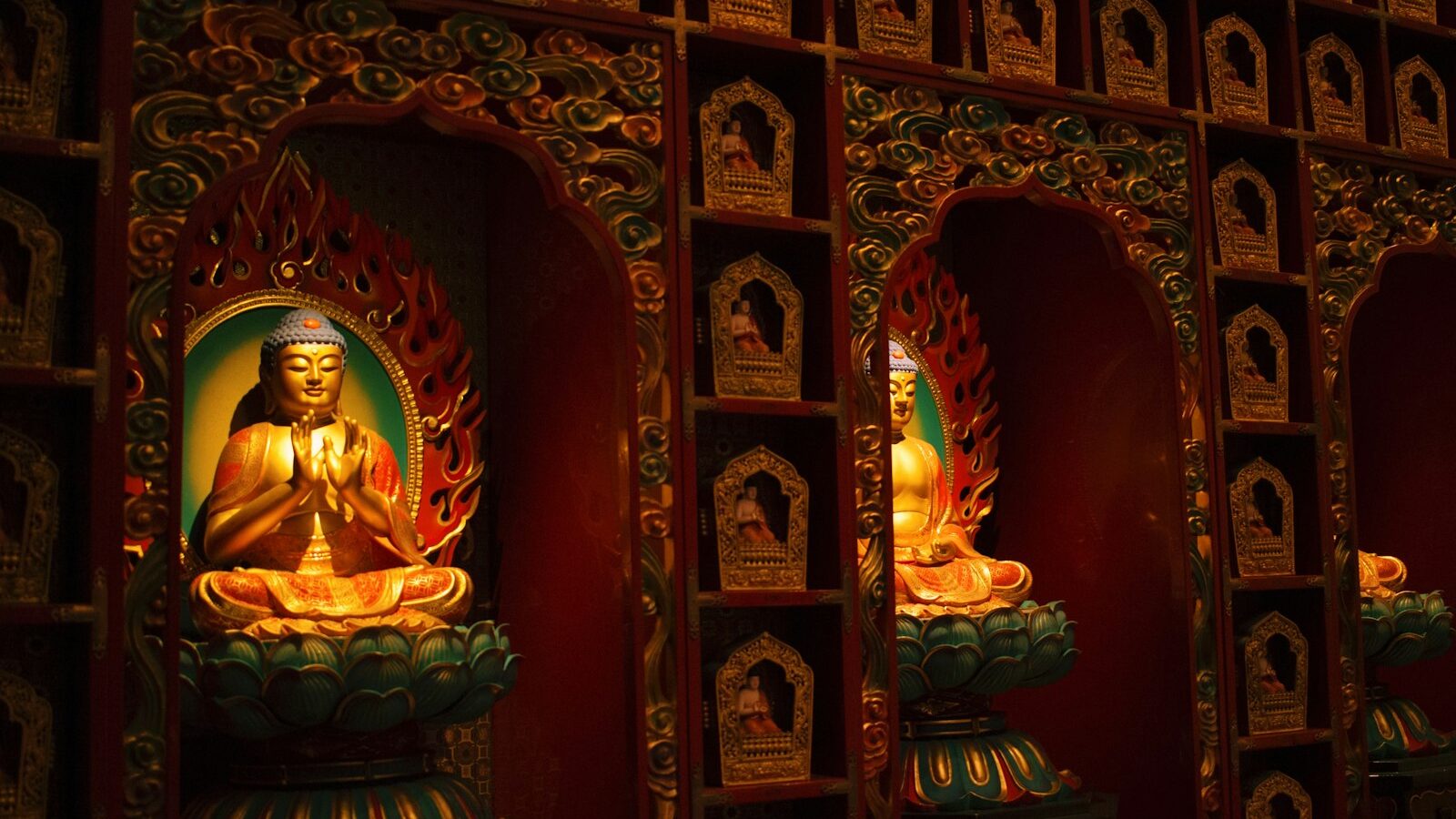
In the Balestier area, a district already rich with heritage, stands the Burmese Buddhist Temple, a rare and beautiful outpost of Myanmar’s Theravada Buddhist tradition in Singapore. Best known for the serene marble Buddha at its heart, it is the only temple of its kind here built in the Burmese style. For visitors and devotees alike, the Burmese Buddhist Temple Singapore is a place of deep calm and quiet devotion.

What It Is and Who It Serves
The temple follows Theravada Buddhism, the branch of the Buddhist tradition that predominates in Myanmar, Thailand, Sri Lanka, and much of mainland Southeast Asia. It was established to serve the Burmese Buddhist community in Singapore, and it continues to welcome Buddhists of all backgrounds as well as anyone seeking a peaceful place for reflection. Monks are associated with the temple, and it upholds Theravada practices of meditation, chanting, and merit making.
Theravada Buddhism emphasises the teachings of the Buddha as preserved in the Pali scriptures, and its practice centres on ethical conduct, meditation, and the cultivation of wisdom. For those exploring the diversity of Buddhist temples in Singapore, this temple stands out for its distinctly Burmese character, from its imagery to its atmosphere.
History and Significance
The origins of the temple date back more than a century, making it one of the older Buddhist institutions in Singapore. It began as a modest place of worship for the Burmese community and grew over the decades, eventually relocating to its present home in the Balestier district, where a purpose-built temple was constructed to house its treasures and serve its congregation.
Its greatest treasure, and the source of much of its significance, is a large statue of the Buddha carved from a single block of white marble. This magnificent image, brought from Myanmar, is among the most notable of its kind outside that country and draws admirers for both its spiritual presence and its craftsmanship. The temple’s long history and its role as the anchor of Burmese Buddhist life in Singapore make it a cherished part of the nation’s religious heritage.
Architecture and Notable Features
The temple is built in a Burmese architectural idiom, distinct from the Chinese, Thai, or Sri Lankan styles found elsewhere in Singapore. Its design incorporates elements familiar from Myanmar’s own temples and pagodas, creating a setting that feels authentic to the tradition it serves.
The centrepiece is unquestionably the great marble Buddha, seated in serene composure, its pale stone seeming to glow in the light of the shrine hall. Around the temple, visitors will also find other Buddha images, a sacred Bodhi tree grown from a cutting linked to the tree under which the Buddha is said to have attained enlightenment, and depictions drawn from Buddhist teaching and legend. The upper levels and shrine spaces are arranged to encourage quiet contemplation, and the overall mood is one of stillness and reverence rather than spectacle.
Its Role Today
Today the Burmese Buddhist Temple remains an active and much-loved place of worship. It observes important Buddhist festivals, including those marking key events in the life of the Buddha, and it hosts prayers, meditation, and community gatherings throughout the year. It serves the Burmese community in Singapore while also offering a welcoming refuge to anyone in search of calm. Its presence in Balestier adds a valuable strand to the neighbourhood’s already layered cultural fabric, and it continues to introduce visitors to the gentle discipline of the Theravada path.
How to Get There
The temple is located in the Balestier area, to the north of the city centre. The nearest MRT station is Boon Keng, within walking distance, while Novena is also reachable with a slightly longer walk or a short bus ride. Numerous bus services run along Balestier Road and its surroundings, making the temple easy to reach by public transport.
Because this is a functioning temple with its own daily rhythm, please consult its official channels for current opening hours and any guidance before visiting. Avoid relying on unofficial listings for such information.
Respectful Visitor Etiquette
As an active Buddhist temple, it asks of visitors the mindful respect due to any sacred space. Dress modestly, with shoulders and knees covered. You will be expected to remove your footwear before entering the shrine halls, so choose shoes that are easy to slip off. Move quietly and keep your voice low, especially where people are meditating or praying.
When seated near Buddha images, it is customary in the Theravada tradition to avoid pointing your feet towards the Buddha, so sit with your feet tucked to the side. Do not touch the statues, offerings, or ritual items, and treat all Buddha images with reverence. If you wish to photograph the temple, ask first and follow any posted restrictions, and never let photography interrupt someone at prayer. When unsure, simply observe respectfully and follow the temple’s own guidance. For further preparation, our guide to temple worship etiquette for newcomers is a helpful companion.
A visit to the Burmese Buddhist Temple is a chance to sit in the presence of a truly remarkable marble Buddha and to experience the serene heart of Theravada devotion in the middle of Singapore.
Frequently Asked Questions
What is Theravada Buddhism and how does it differ from Mahayana? Theravada is the branch of Buddhism common in Myanmar, Thailand and Sri Lanka, and it emphasises the teachings preserved in the Pali scriptures, ethical conduct and meditation. Mahayana, followed in much of East Asia, includes different texts and figures. Both honour the Buddha.
Why can I not point my feet towards the Buddha image? In Theravada custom, feet are considered the lowest part of the body, so pointing them at a Buddha image is disrespectful. When sitting, tuck your feet to the side or behind you. Treat all Buddha images with reverence and avoid touching them.
Can I meditate or join prayers at the Burmese Buddhist Temple? The temple hosts prayers and meditation, and welcomes anyone seeking calm, but sessions and rules are set by the temple. Check its official channels for schedules and whether visitors may join. If unsure, sit quietly and follow the guidance of those around you.
What is the Bodhi tree at the temple and why is it special? It is a sacred tree grown from a cutting linked to the tree under which the Buddha is said to have attained enlightenment. Buddhists regard it with great respect. Visitors should not pick leaves or damage it, and can simply admire it quietly.
Is the temple easy to reach by public transport? Yes, the temple is in the Balestier area, with Boon Keng MRT within walking distance and Novena reachable by a longer walk or a short bus ride. Many buses serve Balestier Road. Check a journey planner for the best route on the day.
Further reading: Theravada, Mahayana and Tibetan Temples in Singapore Compared · The Temple of a Thousand Lights